
Tucked within Melbourne’s vibrant heart lies The Block Arcade, a treasure trove that transcends its physicality. More than a location, it’s a passage through history, a harmonious blend of eras, and a tribute to Melbourne’s unceasing charm. This iconic gem beckons, inviting visitors to traverse time, immerse in history, and celebrate the city’s enduring allure.
Stepping through its threshold, you’re transported to an era where opulence and artistry converge seamlessly. The ornate facade, adorned with intricate motifs and sculptures, extends a captivating invitation into its enchanting world.
Each corner unravels a new facet of its storied history, offering glimpses into past sensibilities. Boutique shops, adorned with original features, house curated treasures that seamlessly blend with their surroundings, bridging the gap between past and present.
Should your visit coincide with the top of the hour, the resonating melody of Gaunt’s Clock fills the air, a harmonious reminder of time’s passage. Look up to meet the gaze of two imposing figures flanking the clock dial—Gog and Magog, the mythical giants.
Since 1892, these medieval warriors have silently guarded the arcade’s southern flank. With mechanized arms, they strike the chimes, marking the hours. Crafted from pine by Mortimer Godfrey, each towering figure stands around seven feet tall, inspired by London’s Guildhall sentinels dating back to the 15th century.
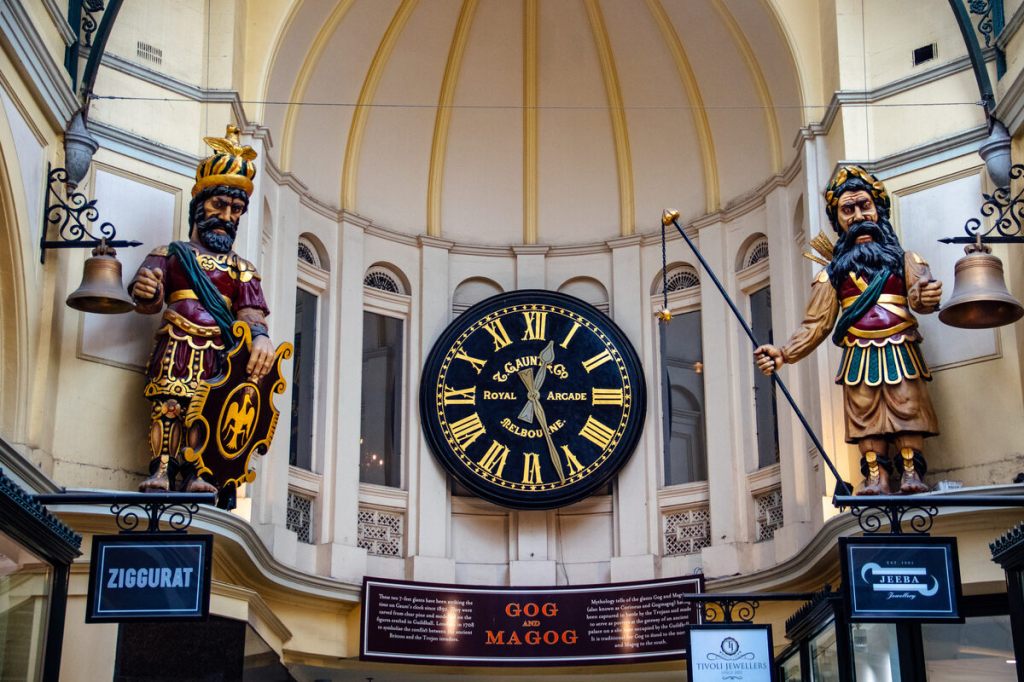
Gaunt’s Clock, added two decades after the arcade’s construction, becomes a stage for these mythical figures. Named after Thomas Gaunt, a Melbourne jeweler and clockmaker, it enhances the bustling atmosphere with its conspicuous presence.
Gog and Magog’s origins are woven from ancient texts, Roman and pagan influences, and medieval lore. As the display within the arcade explains, they symbolize the ancient conflict between Britons and Trojan invaders. Captured in battle, they served as porters at a palace entrance, a site later occupied by London’s Guildhall.
Their story, an amalgamation of echoes from different eras, forms a harmonious blend that befits their stature as giants, embodying diverse narratives and a touch of whimsy.
Beyond its architectural splendor, The Block Arcade thrives as a modern hub that coexists with contemporary shops and cafes, breathing new life into its historic ambiance.
Stepping away from bustling Collins Street into the tranquil arcade hall transports you to another dimension. The serene ambiance envelops you, each step unveiling history’s layers, with relief sculptures adorning walls and seasonal plant displays offering touches of natural beauty.
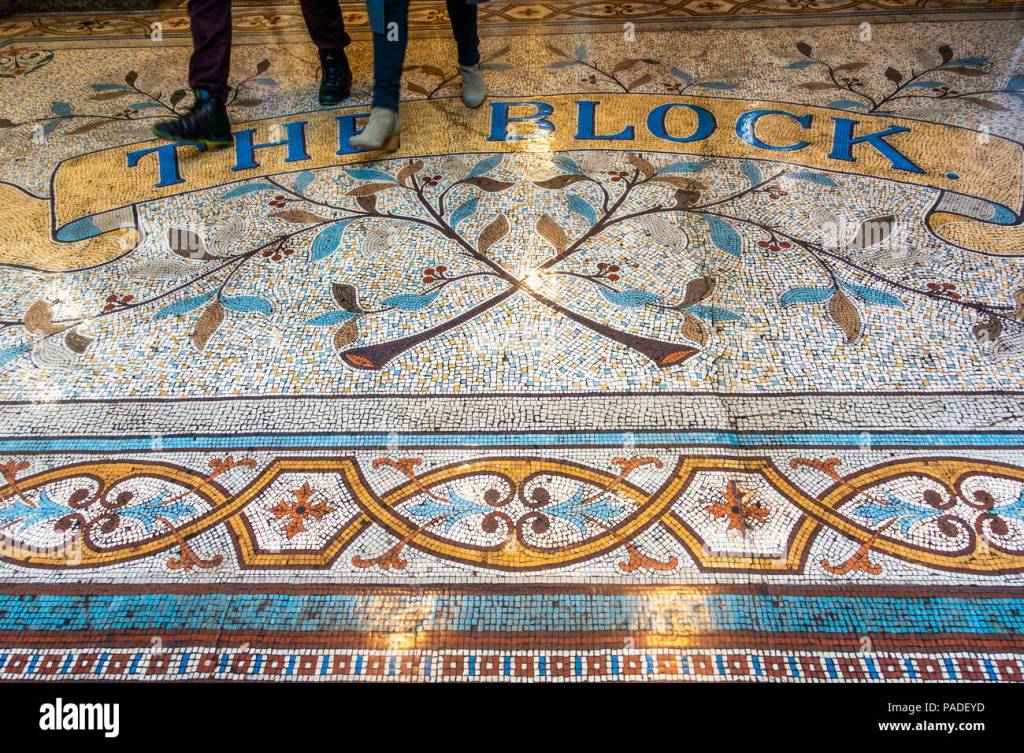

The mosaic-tiled floor, a masterpiece in itself, mirrors the elegant brown-and-white palette of the arcade’s walls. Light cascades through a wrought iron and glass canopy, casting an ethereal glow.
Strolling along the shops, uniform signage guides your way, fostering rhythm throughout the walkway. The arcade’s layout forms an elegant “L” shape, culminating in bustling Elizabeth Street. Additionally, Block Place leads you toward the quaint haven of Little Collins Street. I first visited the arcade in 2013 and since then a lot of shops of closed giving way to new ones.
The Block Arcade transcends architectural splendor; it’s a portal to the past, where Melbourne’s stories interweave with a vibrant present. Every element, from Askew’s visionary inception to the tales of enigmatic occupants, is a chapter etched in stone, beckoning you to relish its rich history and irresistible allure.
Learn more by visiting The Block Arcade: Spectacular Ceilings and The Block Arcade: The Basement where Melbourne Curious shares some insights on this marvellous building and its incredible architecture, history and so much more.

 Local Vic