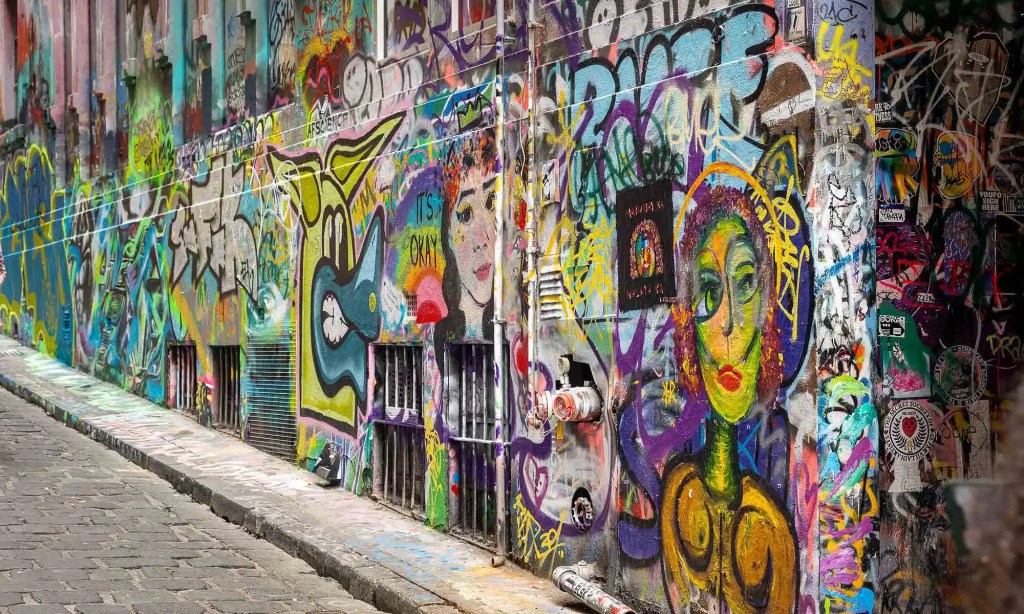
If this is your first time in Melbourne, you might arrive expecting grand boulevards and obvious landmarks. But someone will surely guide you towards exploring Melbourne’s Laneways.
Behind the glass towers and Victorian facades of Melbourne lies a network of narrow passages that were once service corridors for horses, deliveries and refuse. Today, they are the city’s cultural bloodstream — filled with espresso machines, stencil art, tiny wine bars and the quiet hum of creative rebellion.
Some of these lanes are today’s Melbourne’s most celebrated, most photographed, most internationally recognised spaces.
Hosier Lane. Degraves Street. Centre Place. AC/DC Lane. Hardware Lane. These names now appear on international travel lists alongside the Eiffel Tower and Times Square. How that happened is one of the more unlikely urban stories of the last thirty years.
Let’s walk them slowly. One by one.
What laneways actually are?
Melbourne’s grid was laid out by Robert Hoddle in 1837 and was designed with laneways running through the middle of each block, parallel to the main streets. They were functional, not scenic. Service access for the hotels and warehouses and commercial premises that faced the main streets. By the mid-20th century, as deliveries shifted to trucks and rubbish collection modernised, many laneways became effectively unused. They were narrow, dark, often grubby corridors that the city didn’t quite know what to do with.
The transformation started in the 1980s and accelerated through the 90s, driven by a confluence of things: high rents on main streets pushing independent businesses into cheaper spaces, a generation of Melbourne creatives who were less interested in prestige addresses than interesting ones, and a gradual cultural shift toward the small, the independent, and the authentic.
A few cafés opened in laneways. They were good. More followed. Artists started painting the walls — initially without permission, then with it. The city, to its considerable credit, recognised what was happening and got out of the way.
Hosier Lane – Global face of Melbourne street art
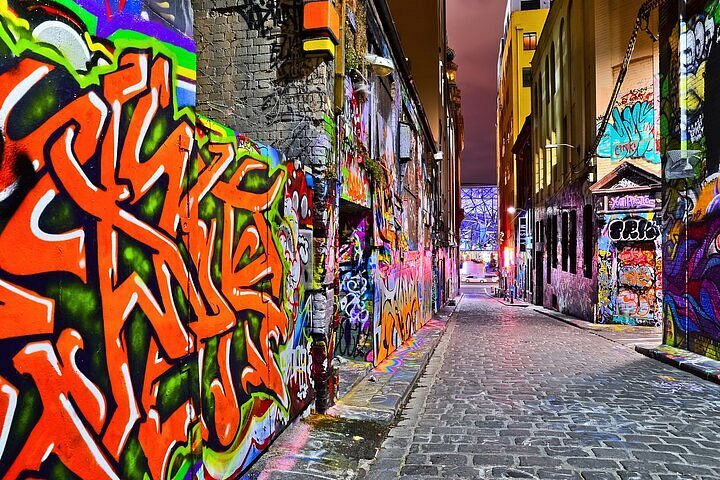
Hosier Lane is the one you’ve already seen on Instagram whether you meant to or not. Directly opposite Federation Square, this bluestone lane is an open-air gallery where art never stays the same for long.
Hosier Lane is probably the most famous laneway in Australia and one of the most visited street art sites in the world. It runs off Flinders Street near Federation Square and has been a legal street art site where artists can paint over each other’s work continuously for decades.
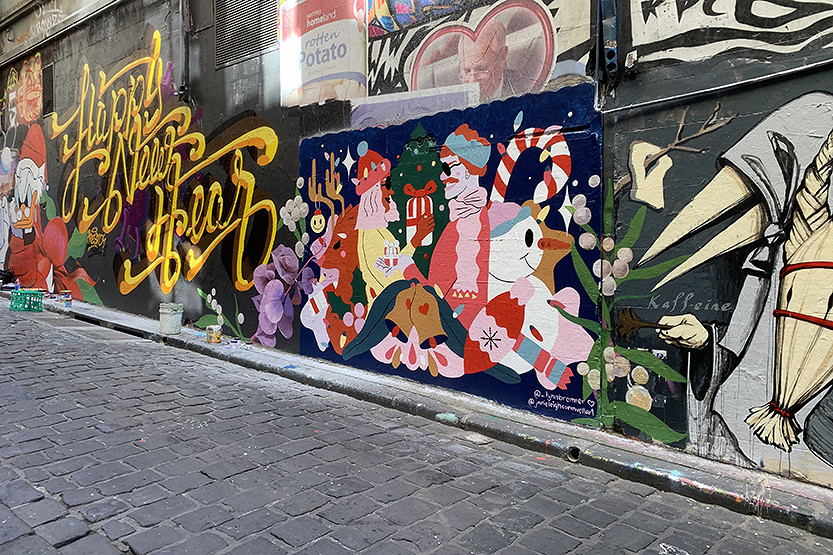
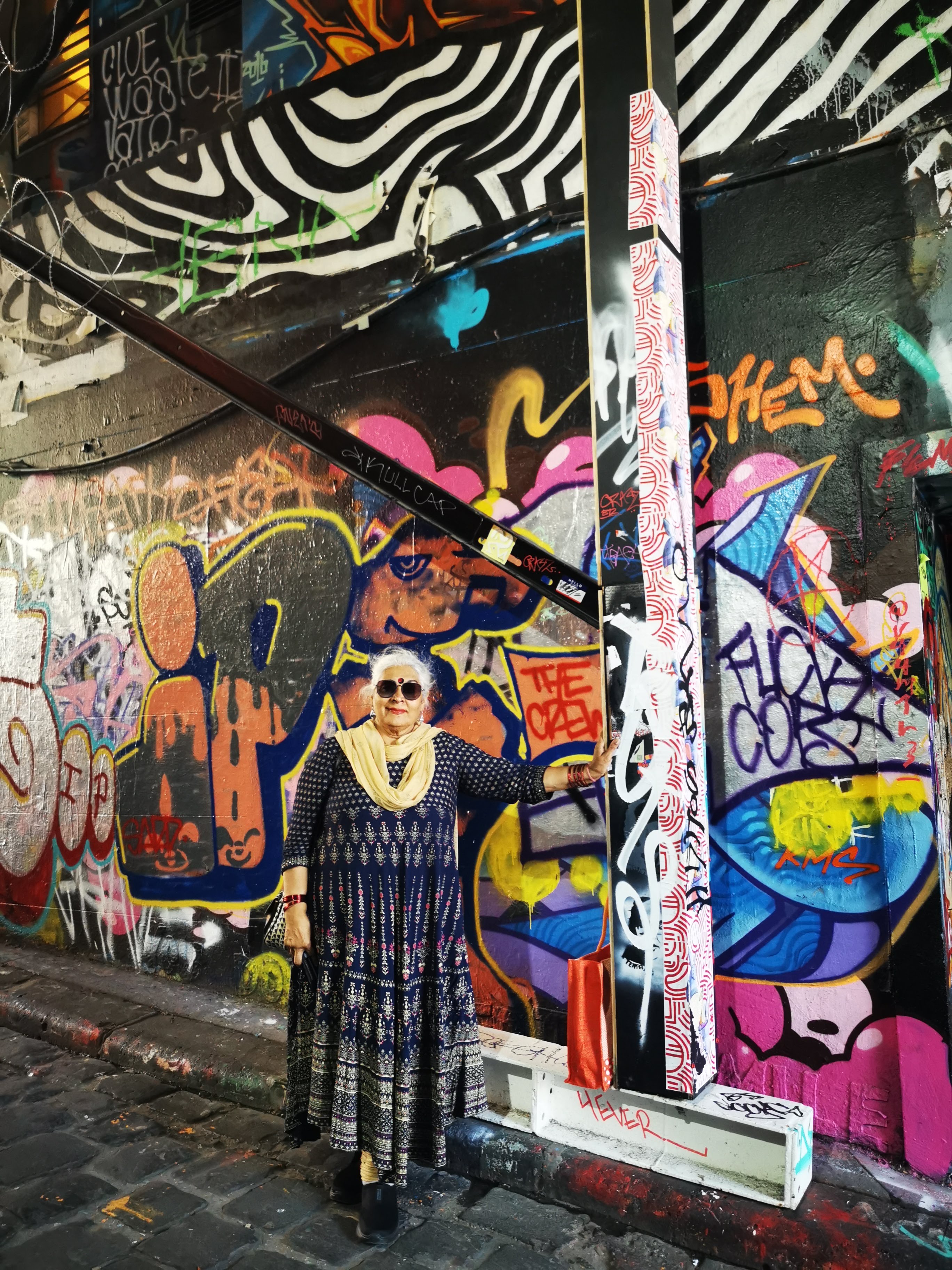
The result is a constantly evolving, layered, occasionally confrontational gallery that is never the same twice. International artists have made pilgrimages to paint there. The quality of work ranges from extraordinary to messy, which is exactly as it should be. The lane smells permanently of spray paint and the walls are palimpsests with layer on layer on layer of images, each one covering something that had just become the new normal.
There are guided street art tours of Melbourne’s laneways that have been running for years. The guides are genuinely knowledgeable about the artists, the history, and the politics of the scene. But you don’t need a guide. You just need to walk in.
Insider Tip: For best photograpghs, go early mornings. By midday, the crowds arrive.
Rutledge Lane
Rutledge Lane is an extension to Hosier Lane and runs parallel to it. Often missed out by people, Rutledge Lane has murals, raw stencil work and protest messaging. It feels less like an open-air gallery and more like a living conversation.
Rutledge is home to iconic venues like Section 8 and Ferdydurke (tucked inside the lane’s buildings), which transformed the space from an alley into a nightlife pulse point.
Degraves Street – Espresso connection
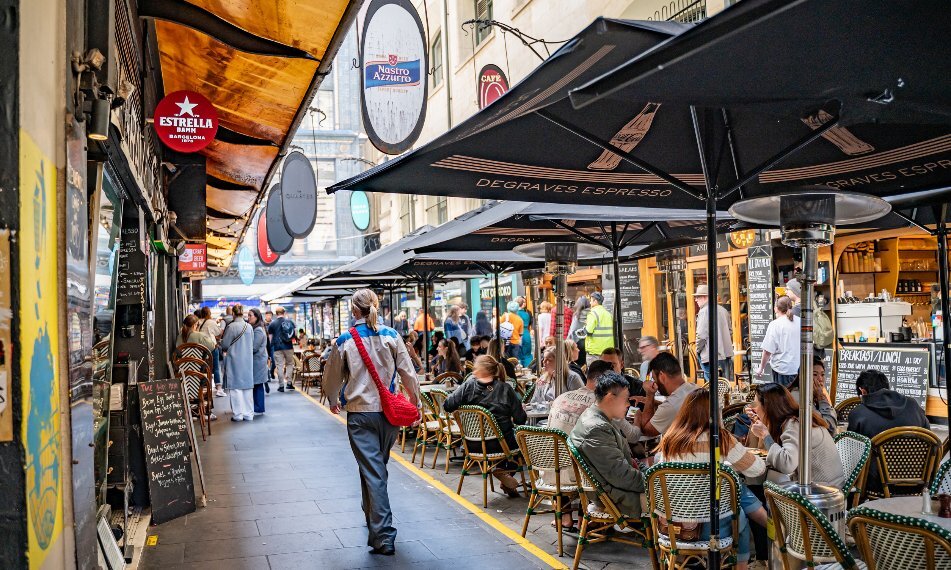
Oh Degraves! Tucked between Flinders Street and Flinders Lane and just steps from Flinders Street Station, Degraves Street is where many first-time visitors accidentally understand Melbourne’s obsession with coffee.
This is where Melbourne’s café culture performs. Tables spill into the lane. Chalkboard menus lean casually against brick walls. Conversations overlap in different accents. Sit here and you’ll understand why Melbourne competes with cities like Rome or Paris for coffee devotion. When you are here, there’s a sense that time slows down slightly.
Iconic spots:
Insider Tip: Come mid-morning on a weekday for the full local rhythm. Avoid peak lunchtime if you want calm as it gets busy fast. By late afternoon, the tone softens as the coffee cups become wine glasses and the rush slows. Check out the ultimate-guide-to-degraves-street shared by Whatson Melbourne.
Degraves rewards stillness
Everyone photographs the overhead shot of café tables. But few look up or glance into doorways. Degraves rewards stillness. So spend some time. Read that vintage signage, admire the tiled entryways leading into side arcades and the layering of old brick and modern graffiti.
Centre Place – The gritty sibling
Just off Flinders Lane, Centre Place feels more chaotic. Lots of of street art on walls, International eateries squeeze into impossibly small spaces and plenty of dumpling spots. It’s less polished than Degraves but has its unique charm. I love those hanging signage stacked above eye level.
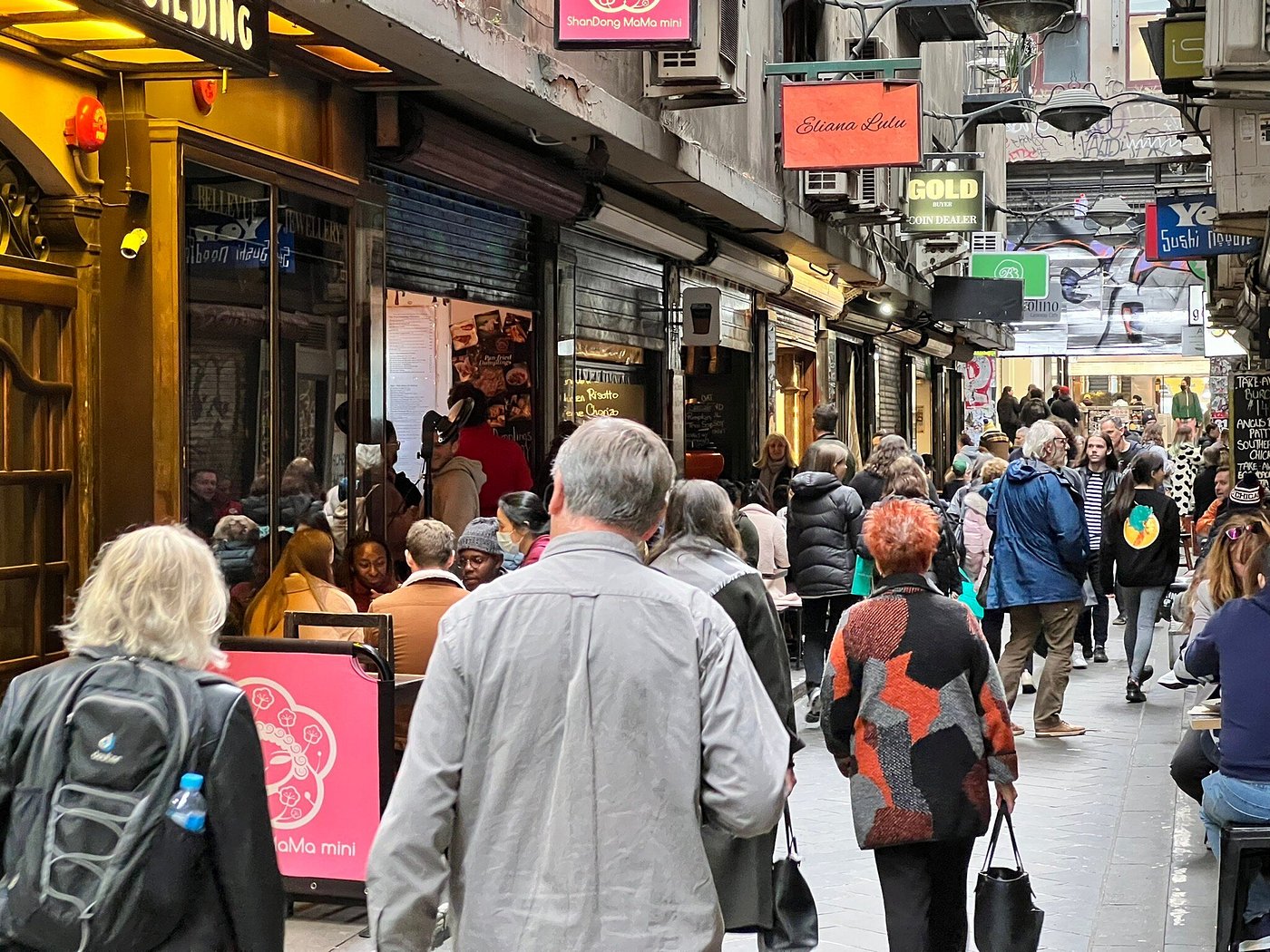
You’ll find:
- Hole-in-the-wall cafés
- Tiny dessert bars
- Eclectic storefronts
Whatson Melbourne shares the-ultimate-guide-to-centre-place for you to make plan your visit.
AC/DC Lane – Rock & Roll Memory
Named after Australian rock legends AC/DC, this is the Lane where music culture meets street art.
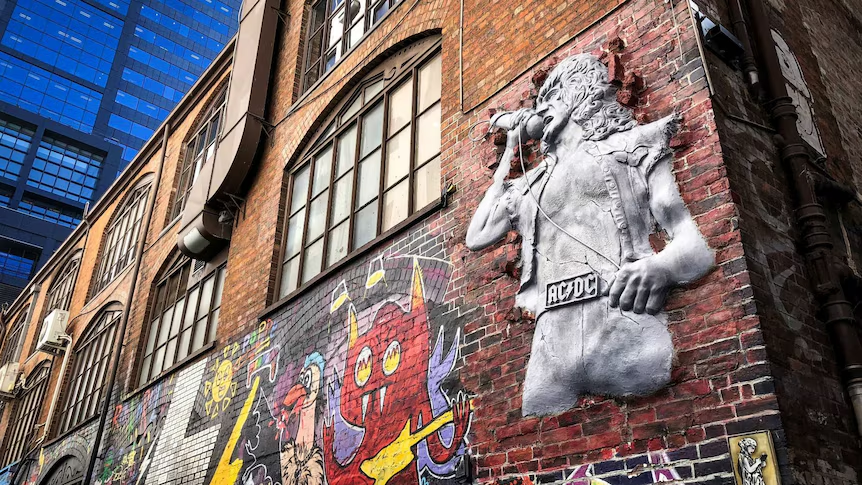
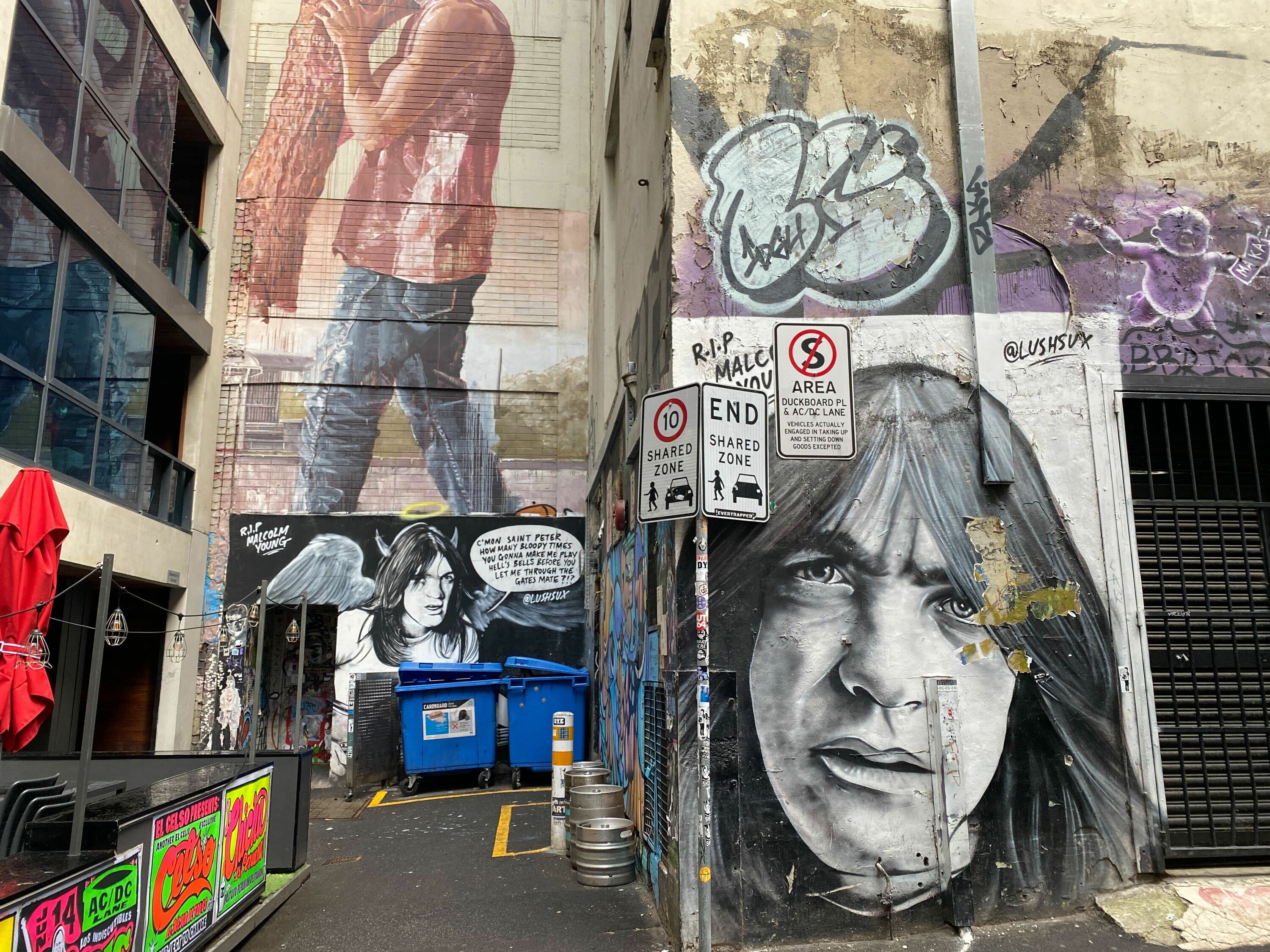

This lane has a lot of attitude. Murals of musicians rotate regularly. Posters layer the walls and the nearby bars hum late into the night.
Insider Tip: Visit in the evening when neon reflections bounce off wet pavement. Its the place to be.
Duckboard Place is a hidden foodie lane
Running parallel to AC/DC Lane, Duckboard Place is smaller but food-forward.
It’s the kind of place you discover accidentally while looking for something else and end up staying. Food options iclude Chinese eatery Lee Ho Fook, Indian-inspired flavours of Tonka, Danish steakhouse A Hereford Beefstouw and the Mary Fortune wine bar.
Hardware Lane – Wine bar corridor
Hardware Lane is slightly wider, more restaurant-focused. European-style dining dominates here. Think Italian trattorias, steak houses and late-night wine bars
It’s atmospheric at dusk. Fairy lights flicker. Conversations spill outward and the environment feels cinematic.
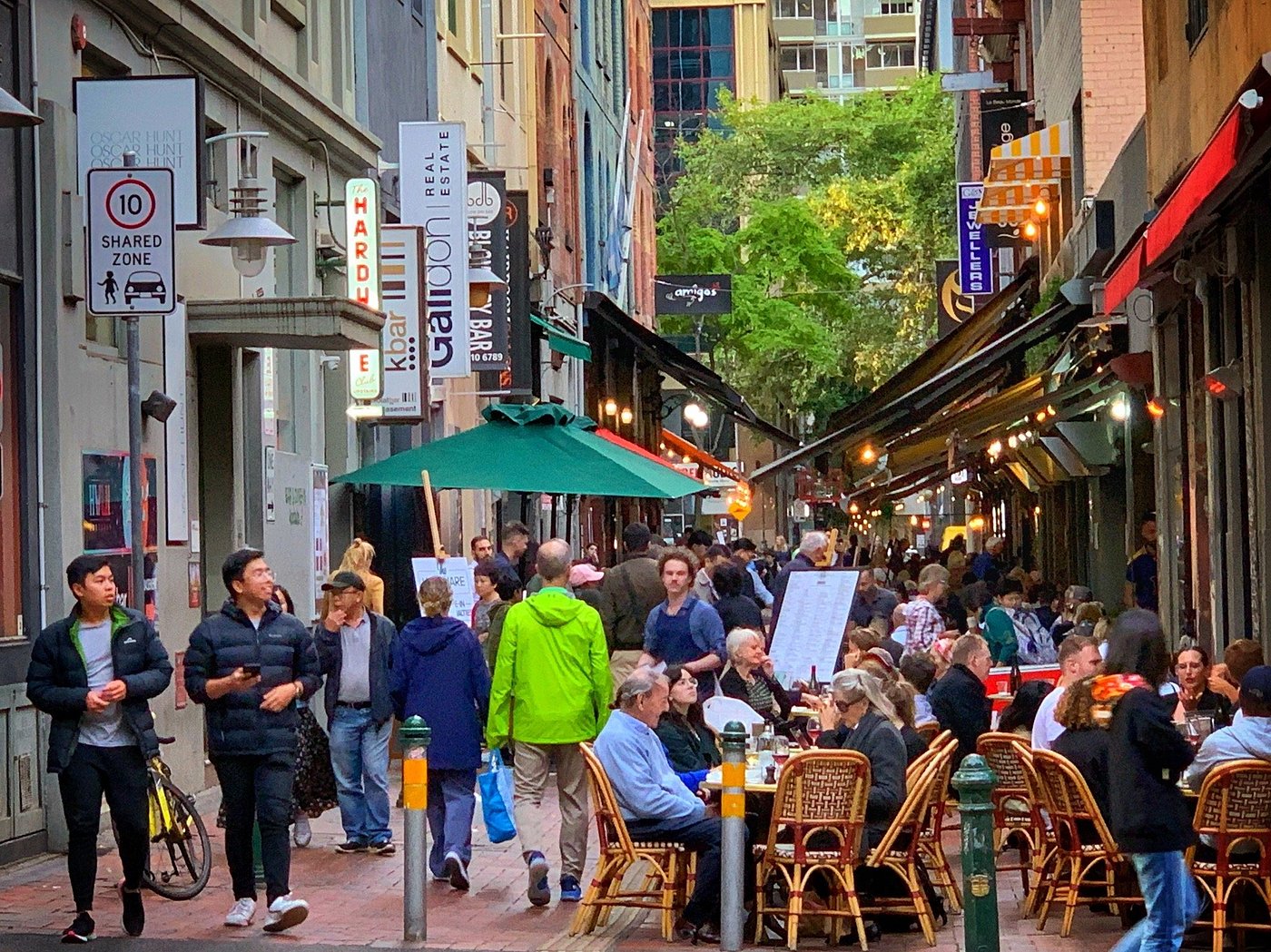
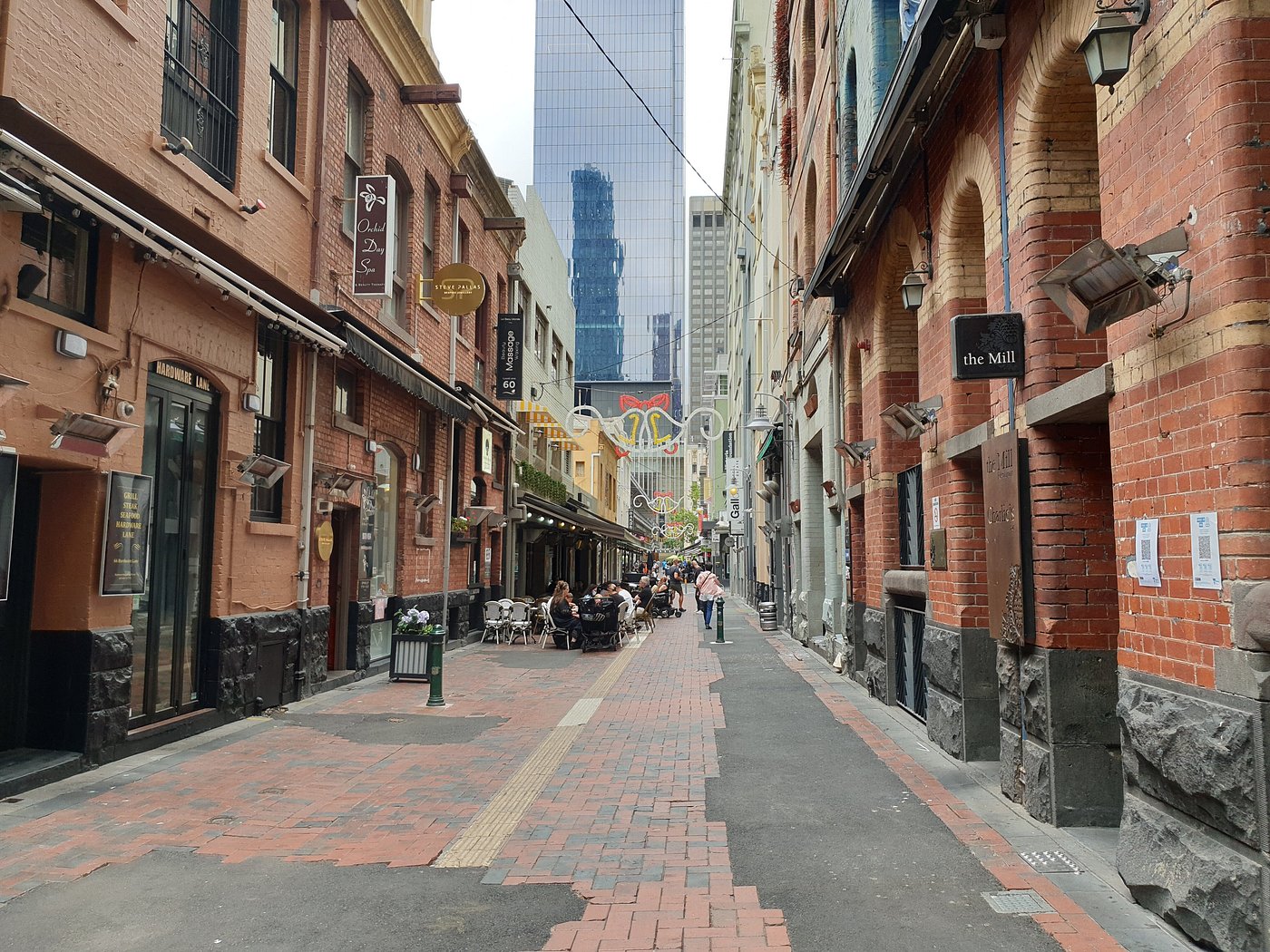
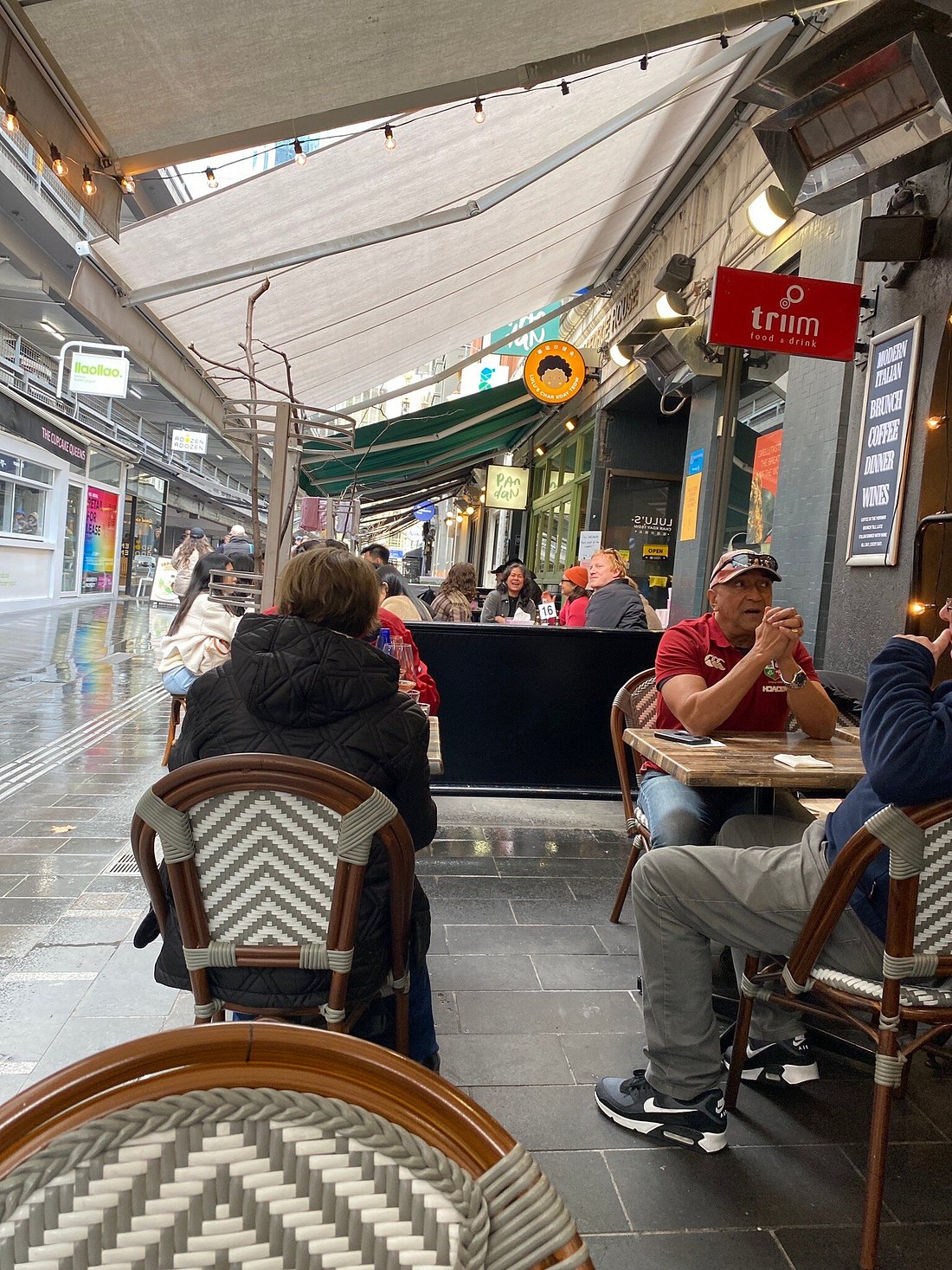
I miss the old red bricks that made Hardware Lane iconic but the new renovations have added bluestones, additional lighting above the laneway, permanent street furniture and even new trees! There’s even a pedestrian crossing on Little Bourke St.
Tattersalls Lane has a theatre energy
Tucked behind Chinatown, Tattersalls Lane has long been connected to performance culture.
Close to theatres and live music venues, it blends:
- Street art
- Nightlife
- Pre-show dinners
It feels transitional as if something is always about to begin.
Block Arcade & Royal Arcade
Not technically laneways in the graffiti sense but essential to this article. Built in the 1890s during Melbourne’s gold rush boom, it’s a reminder that laneways weren’t always gritty.
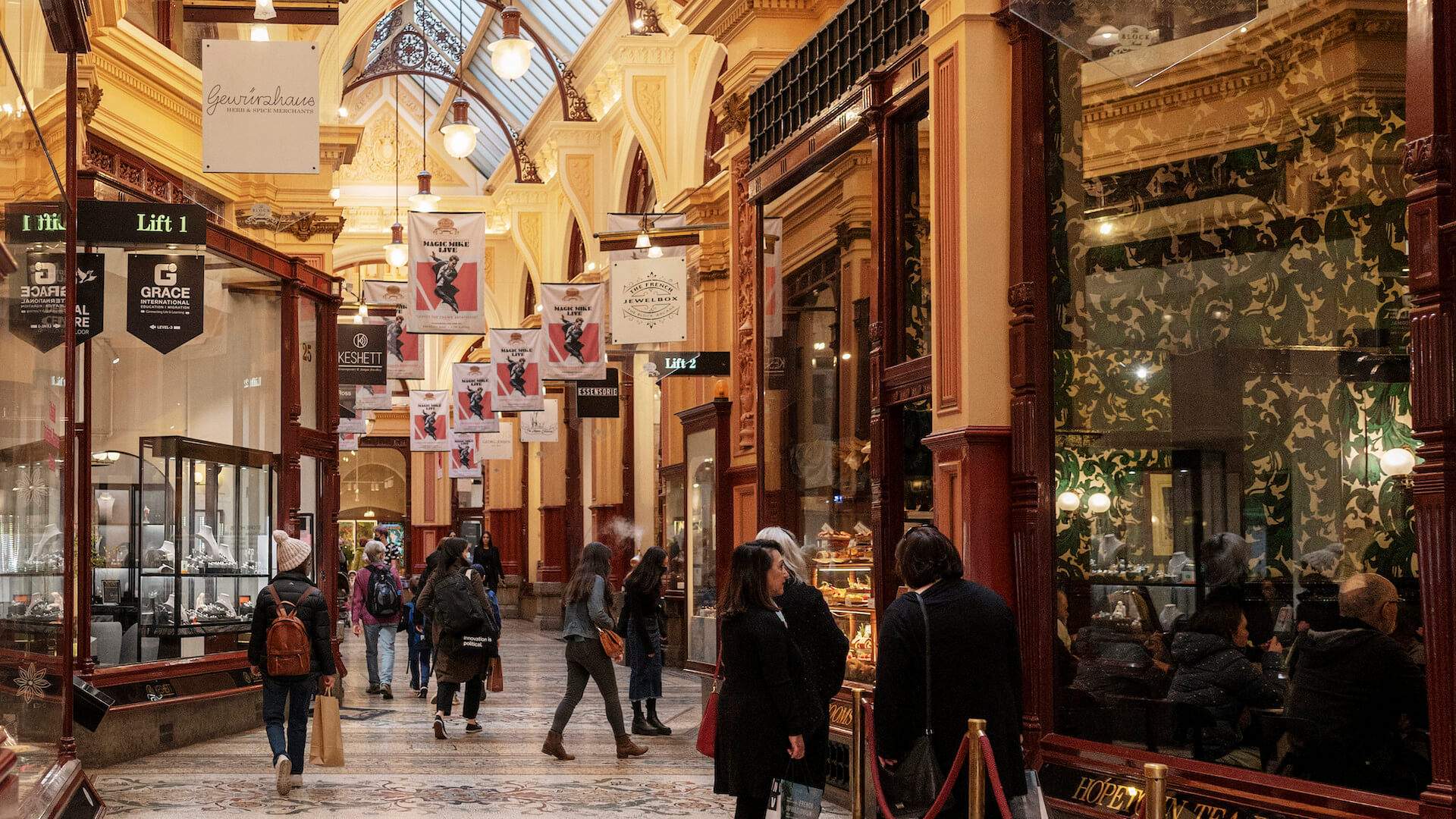
I love visiting the Block Arcade for its grand marble floors, gorgeous mosaic tiles, enchanting glass ceilings and that warm old-world charm. I have spend hours here admiring the architecture. Don’t forget to look up at the glass ceilings. It filters soft natural light across the arcade. Visit mid-morning or late afternoon when the glow is warm and golden.
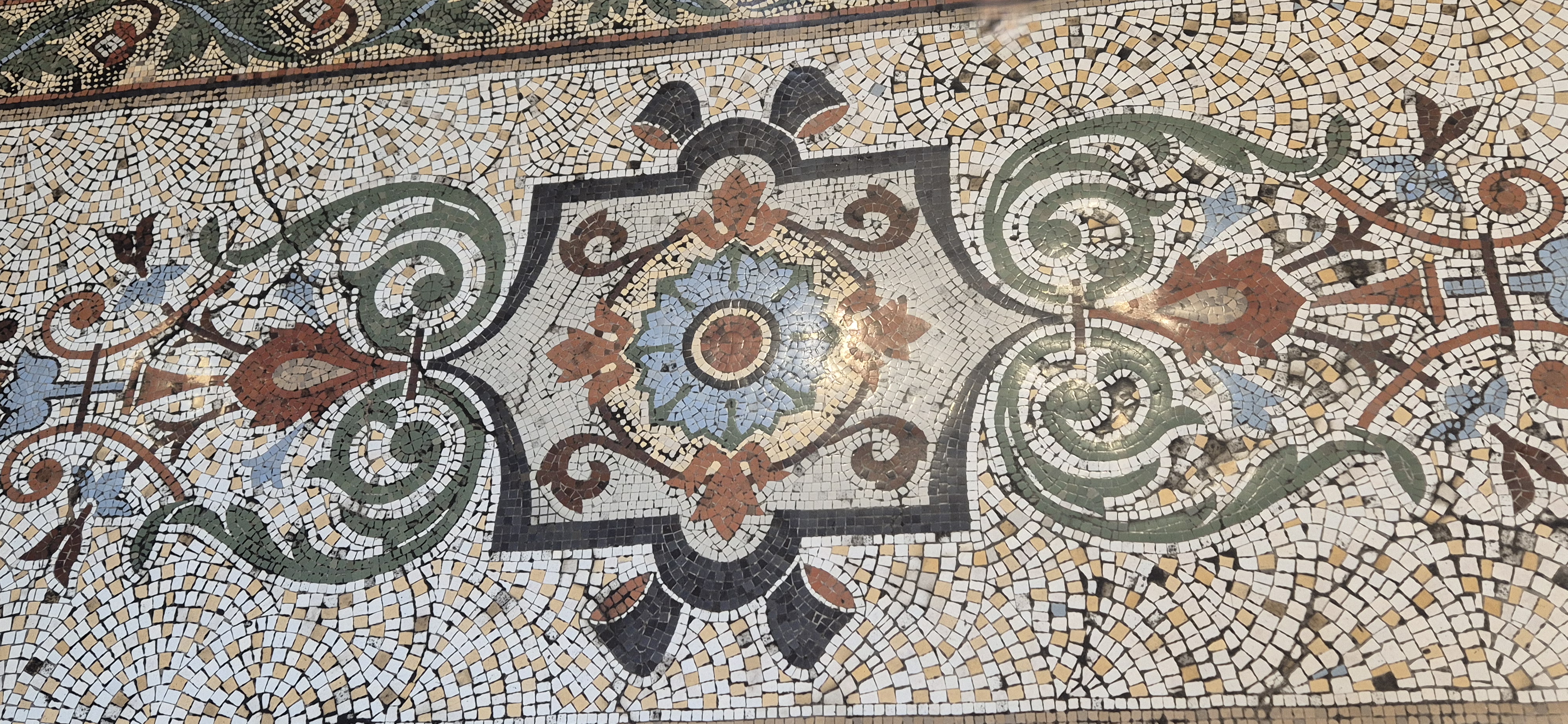
This place shows the refined side of the same laneway culture.
Haigh’s Chocolates puts up elegant chocolate displays and beautifully packaged gifts. Founded by Alfred E. Haigh in 1915 in Adelaide (South Australia), it is Australia’s oldest family-run chocolate maker.
Hopetoun Tea Rooms is a crown jewel. Founded in 1892 during Melbourne’s gold rush prosperity, Hopetoun isn’t just a café but a living piece of Victorian-era indulgence. It’s theatrical. And very hard to walk past. Even if you don’t dine in, do peek through the windows to admire the ornate ceilings, glass cabinets stacked with cakes, and a sense of old-world indulgence.
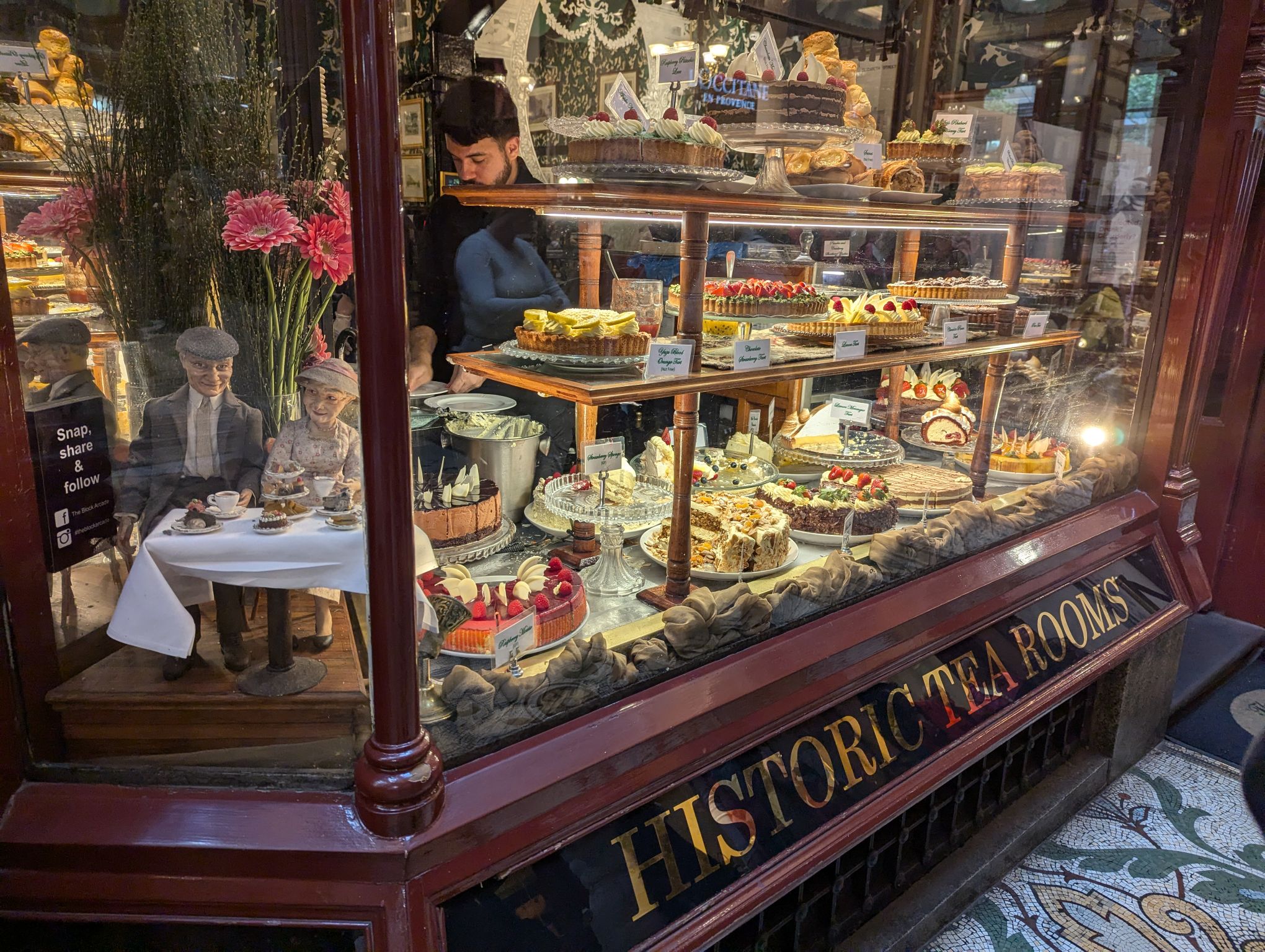
If it’s your first visit, don’t rush it. Order tea and choose the cake that feels slightly extravagant.
There are some famous tea rooms spread across Melbourne and suburbs and I will try to do a seperate blog on those soon.
The laneways as urban policy
What’s sometimes lost in the romance of the laneways story is that a significant part of it was deliberate policy. Melbourne City Council invested heavily through the 1990s and 2000s in laneway activation. They focused on improving lighting, paving surfaces, encouraging outdoor dining licences, commissioning public art, and generally making the case that these spaces could be assets rather than liabilities.
In 2002 a ‘Places for People‘ study was taken by Jan Gehl, a Danish architect and urbanist who transformed thinking about public space globally. He looked at Melbourne’s laneways and pedestrian spaces and essentially confirmed that the city was onto something. Gehl’s analysis helped justify further investment and gave Melbourne an international framework for understanding what it was doing.
Other cities have since tried to replicate it. Very few have succeeded in quite the same way, because the Melbourne laneway culture isn’t just infrastructure and it’s a sensibility. An attitude toward small, independent, slightly hidden, slightly surprising. You can build a laneway. You can’t manufacture what happens in it.
Where to start
If you’ve never properly explored Melbourne’s laneways, start at Federation Square and walk north. Turn into Hosier Lane. Walk through to Flinders Lane. Find Degraves Street and wander up through the Block Arcade. Winess the magic of this gorgeous architecture.
And when you find yourself in a tiny café in a narrow alley, eating something exceptional and drinking a coffee that’s better than it has any right to be, remember: you’re standing in what used to be a rubbish corridor. As they say “Sometimes the best transformations start in the most unglamorous places”.

 Local Vic