Looking for a day trip that combines unusual landscapes, a little history, fresh country air and plenty of places to explore? Put Heathcote on your Victorian travel list. From the remarkable pink and orange formations of Pink Cliffs to gold-rush buildings, bushwalking trails, historic churches and lakeside picnics, this charming Central Victorian town has plenty to offer.
There are places in Victoria that surprise you when you least expect them. Heathcote is one of those places.
Located approximately 110–120 km north of Melbourne (depending on your starting point), Heathcote is best known for its award-winning Shiraz (thanks in part to the ancient red Cambrian soils that are characteristic of the area), but there is much more to discover beyond its vineyards.
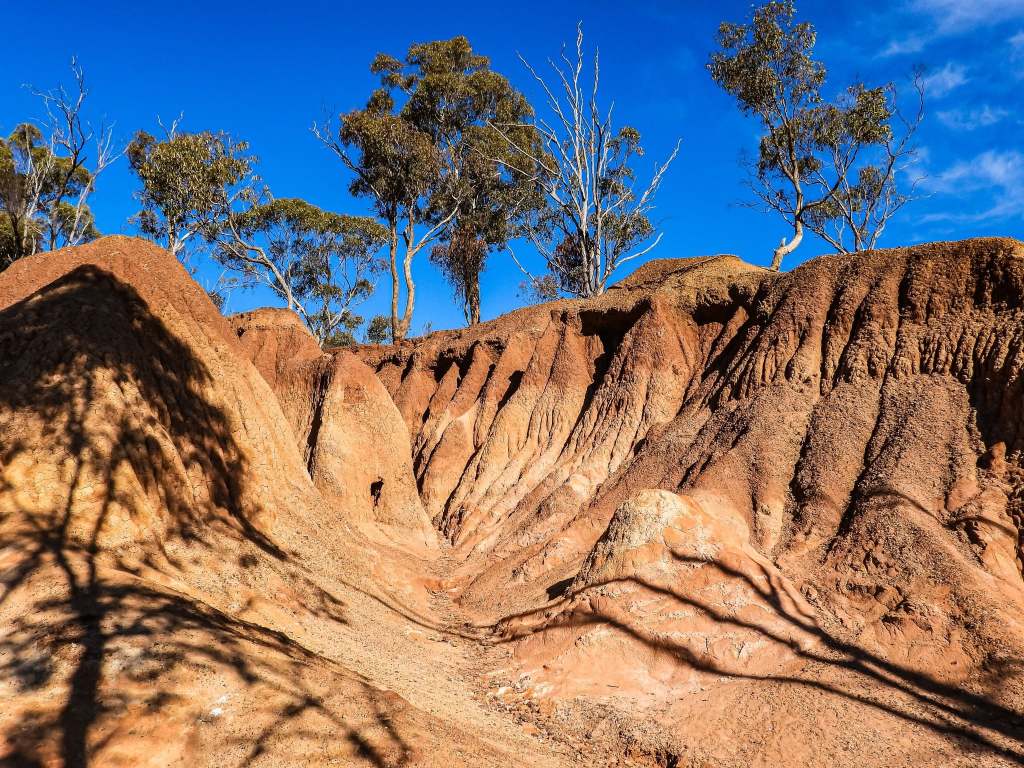
Pink Cliffs Geological Reserve: A landscape shaped by gold fever
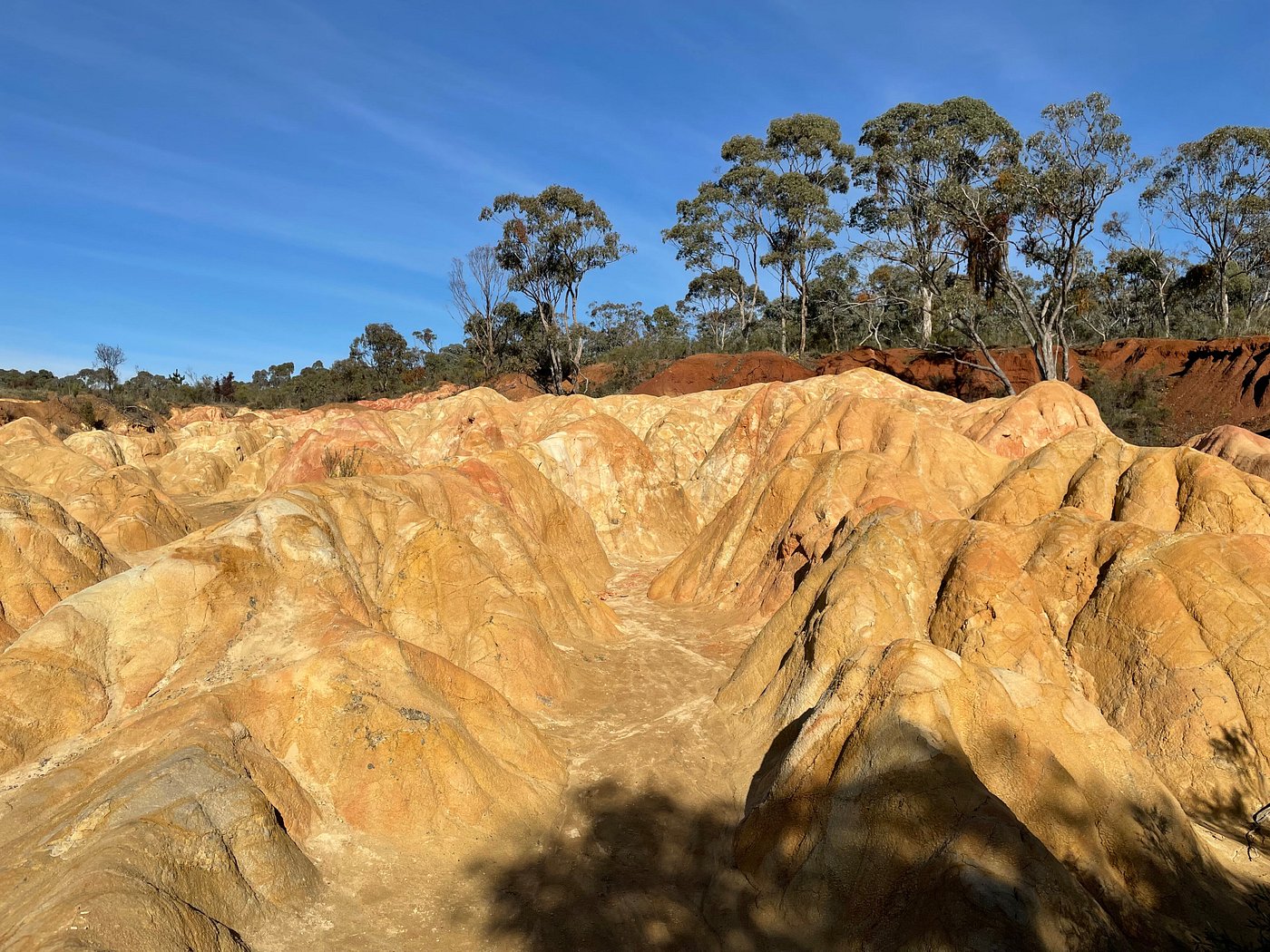
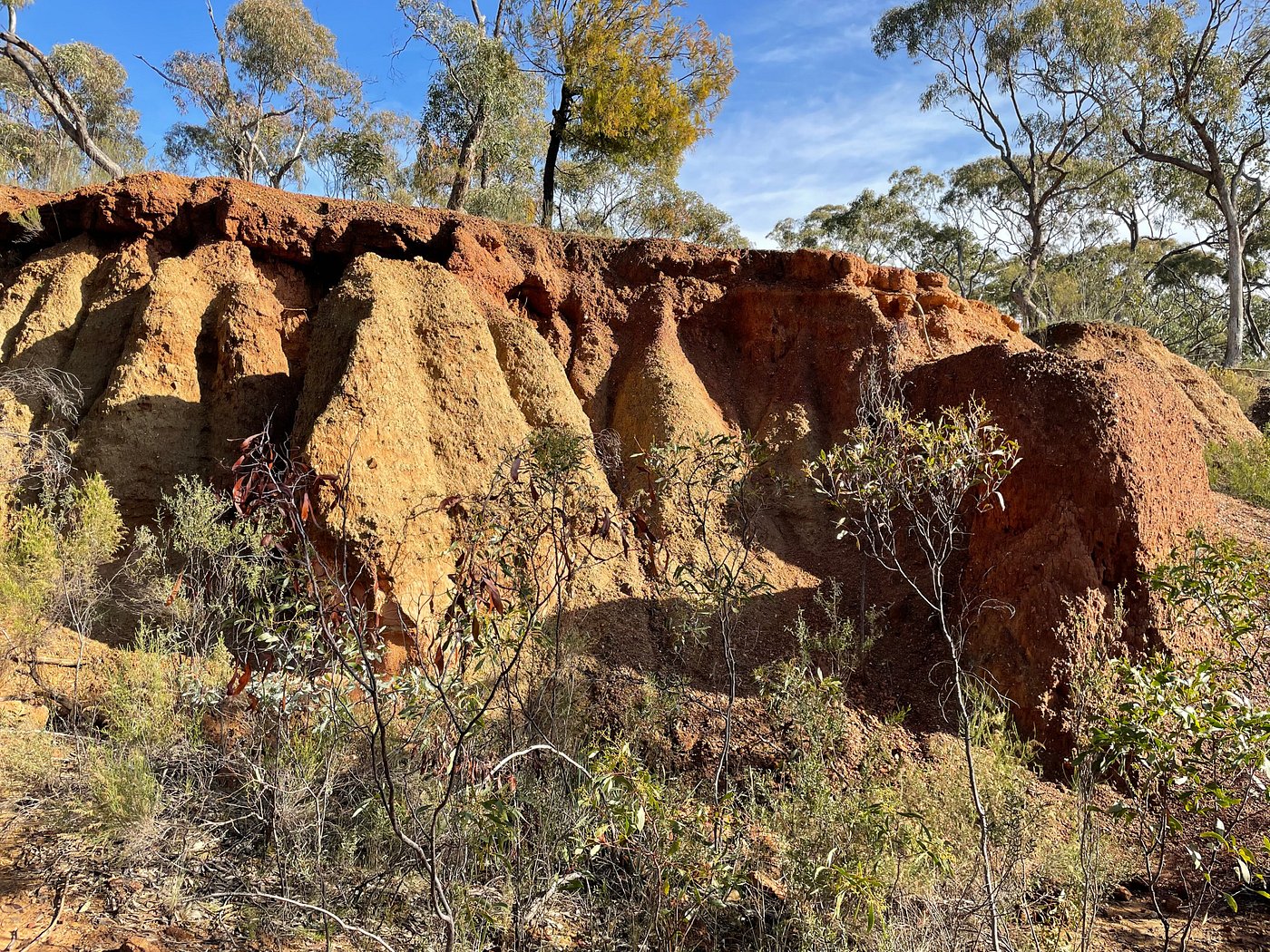
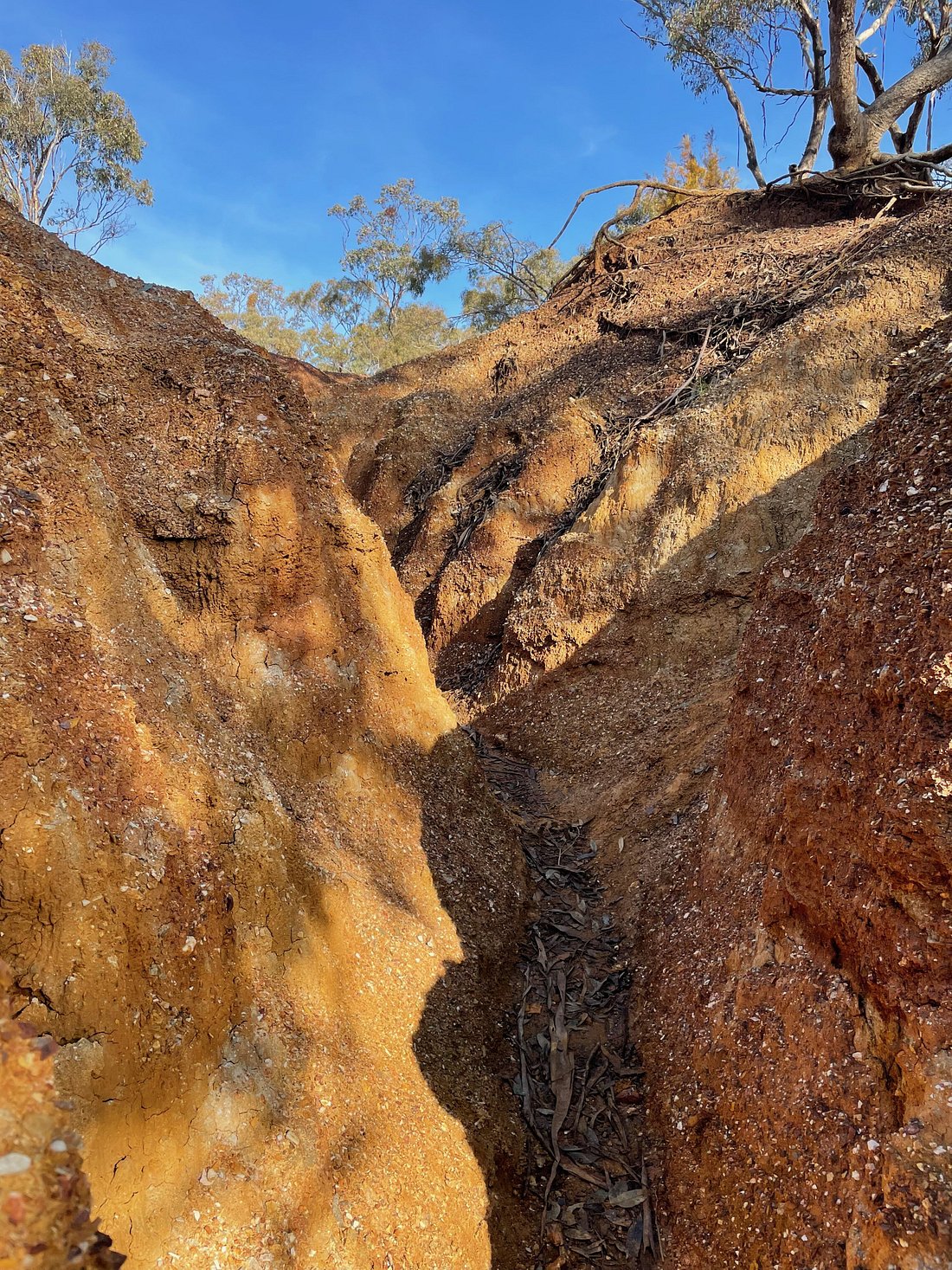
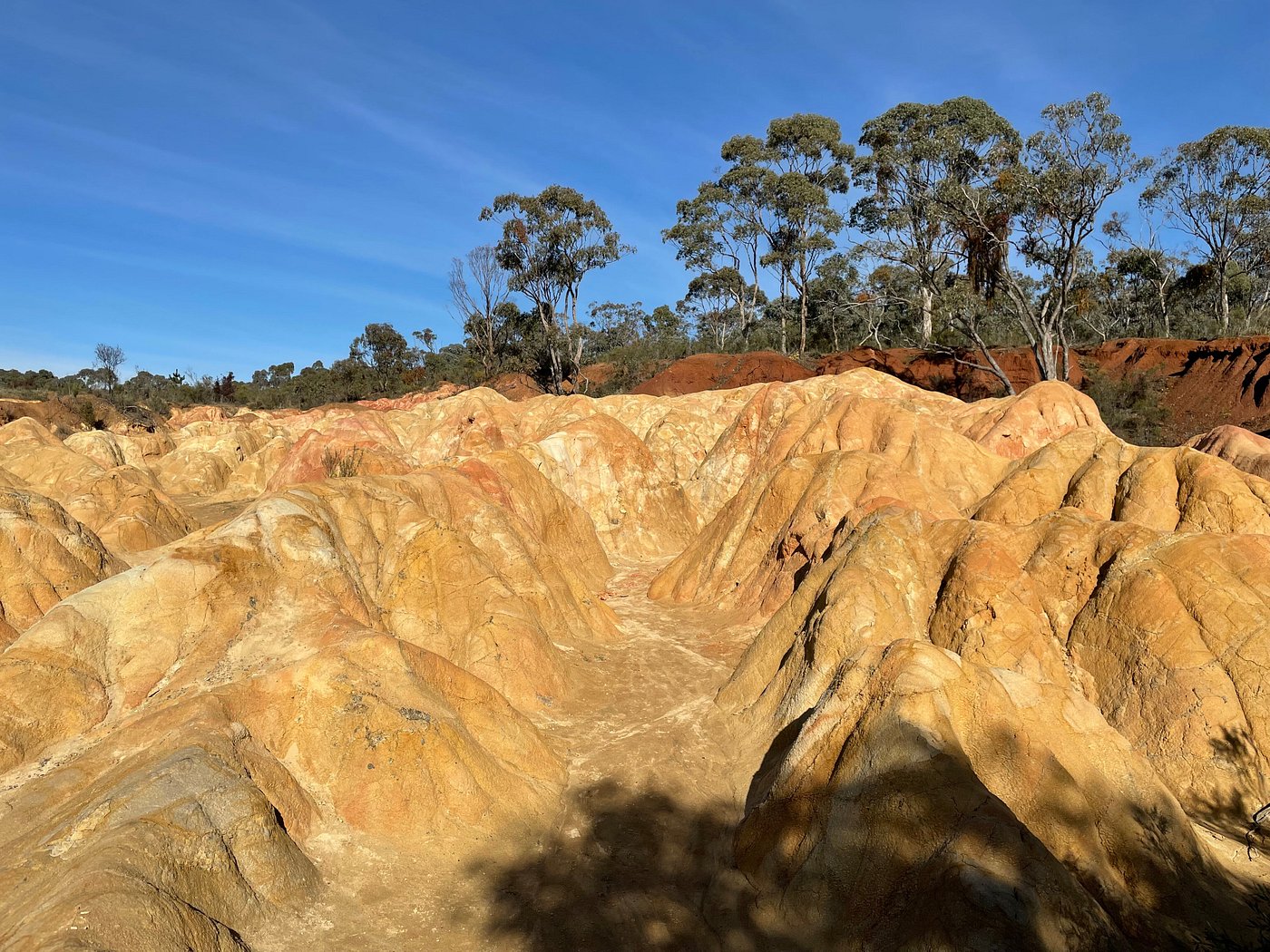
At first glance, the landscape almost looks as though it belongs somewhere far removed from Victoria. Layers of pink, orange, cream and reddish earth form dramatic gullies, little ridges and miniature cliff faces. The unusual colours and textures make this a fascinating place for photographers and anyone curious about how landscapes are formed.
But did you know that this striking landscape owes much of its appearance to gold mining!
A little history behind the colours
During the Victorian gold rush of the 1850s, Heathcote and the surrounding McIvor goldfields attracted thousands of hopeful miners looking to strike it rich.
The early miners relied on relatively simple methods such as gold panning and puddling. As the search for gold continued, mining techniques became more sophisticated, and hydraulic sluicing emerged as a way of processing much larger quantities of earth.
By the 1870s and 1880s, hydraulic mining operations were using powerful jets of water to break down and wash away huge sections of earth in the search for alluvial gold. James Hedley, a pioneer of sluicing and dredging in Victoria, was associated with these operations. Water was brought to the mining area through an extensive race system, allowing miners to direct large volumes of water towards the gold-bearing ground.
The process was remarkably effective at moving earth, but it also came at a considerable environmental cost. Large quantities of sediment washed downstream, affecting waterways and surrounding farmland.
Mining at Pink Cliffs eventually ceased around 1890, following concerns about the environmental damage caused by sluicing. What remained was an exposed and deeply eroded landscape that revealed the colourful geological layers we see today.
The colours are not simply painted onto the earth. They are associated with the weathering of the underlying rock and iron-rich minerals, which have produced the distinctive shades across the formations.
What to expect
The reserve offers a relatively short walk for visitors who simply want to explore the formations. Allow around 30 minutes for a leisurely visit, although you may find yourself spending longer taking photographs and examining the unusual shapes.
Look out for:
- Small gullies and miniature ravines.
- Layers of pink, red, yellow and cream-coloured earth.
- Interesting rock and soil textures.
- Native plants, birds and seasonal wildflowers.
- Changing colours as the sunlight moves across the formations.
Photography tip: Visit earlier in the morning or later in the afternoon when softer sunlight can bring out the different colours and textures.
A little reminder: this is a geological reserve, so please admire the formations without climbing on or damaging the fragile cliff faces. Wear comfortable walking shoes, supervise children around uneven ground and take your rubbish home.
Discover Heathcote’s gold-rush history
Having explored the Pink Cliffs, take some time to discover the town that grew out of the gold rush.
The McIvor-Heathcote goldfields opened in November 1852 after William Bulling and two companions discovered gold in the area. News of the discovery spread quickly, and by early 1853 a major rush was underway.
Some historical estimates suggest the population of the goldfields reached around 40,000 during the rush, although many miners moved on as the easiest gold deposits became harder to find.
Heathcote was officially named following the first land sale in January 1854. Gold brought more than miners. It brought traders, builders, shopkeepers, publicans, religious communities and the services needed to support a growing settlement.
The town’s historic streetscape still offers glimpses of that period. Take a leisurely drive or stroll along High Street and look out for the old courthouse, former shire buildings, town hall and other heritage architecture.
If you enjoy exploring places through their stories, Heathcote’s historic town centre is well worth a little time.
St Mary’s Church
The first Catholic priest in the region, Father Patrick Birch, arrived in the late 1850s. The community initially worshipped in a weatherboard chapel at South Heathcote, which was also used as a school.
After the chapel was damaged by a violent storm in 1862, plans were made for a new church. The foundation stone for St Mary’s was laid in March 1864, with Kilmore architect John Fleury commissioned to design the brick building.
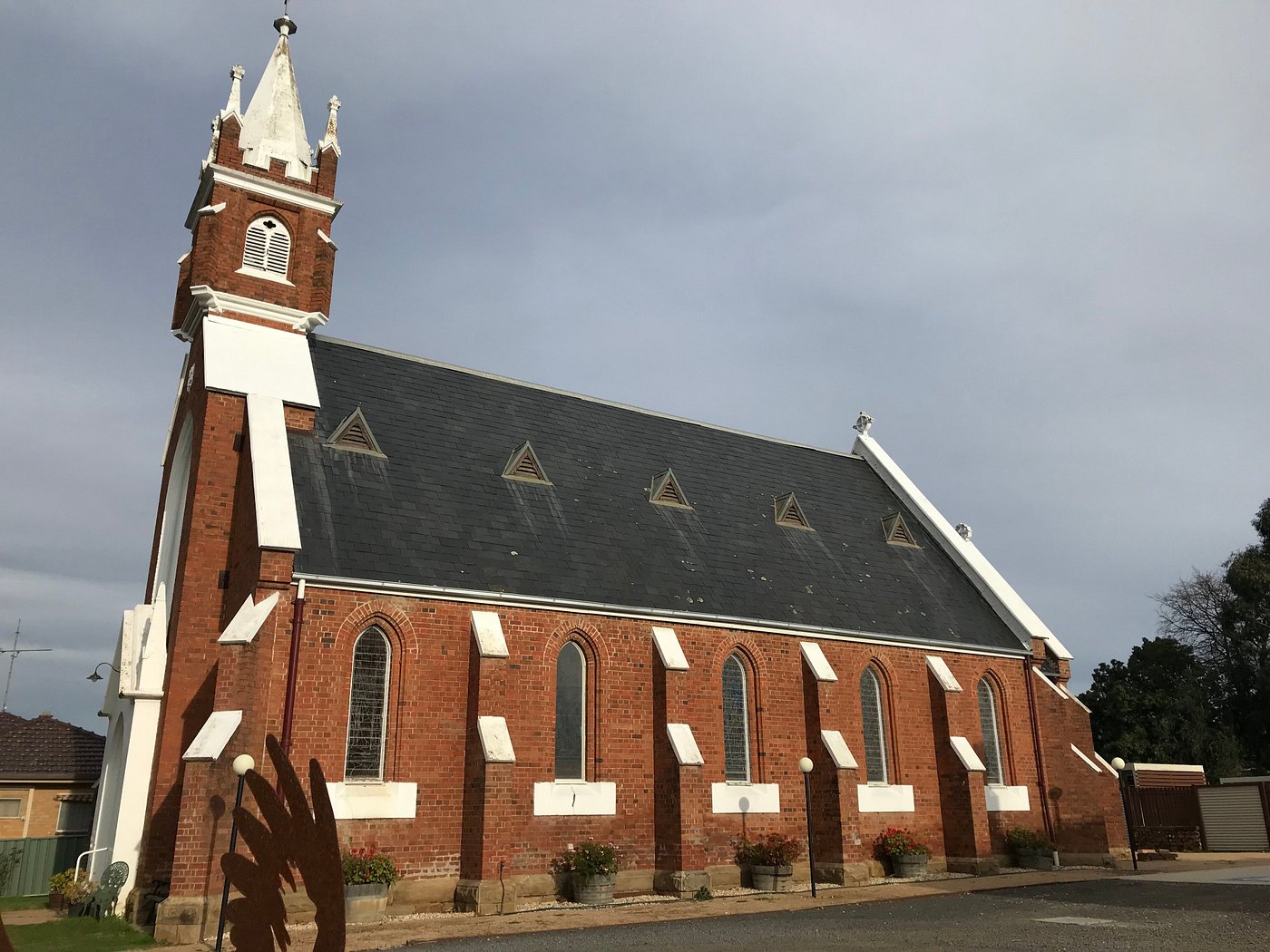
The Catholic church has since undergone changes, with the earlier St Mary’s building replaced by Mary Help of Christians in 1917.
It is worth exploring this history when visiting the church precinct, particularly if you enjoy heritage architecture and the stories of early country communities.
St John’s Anglican Church
Even if historic churches are not usually on your sightseeing list, this is a lovely little stop for appreciating the town’s heritage. Its story dates back to the earliest days of the goldfields. Anglican services were initially held in a tent, before a small stone building known as Christ Church was constructed in 1854.
The present St John’s Church was built later. Its foundation stone was laid in May 1868, and it officially opened for services in October 1869.
Designed by Bendigo architects Vahland and Getzschmann and constructed by local builders, the church is an example of the craftsmanship and architectural styles of the period.
One particularly interesting detail is its stained-glass windows, made by the renowned North Melbourne firm Ferguson & Urie.
St John’s is also notable for remaining on the original site granted to the Anglican community during the early years of Heathcote’s settlement.
O’Keefe Rail Trail: A little adventure on two wheels
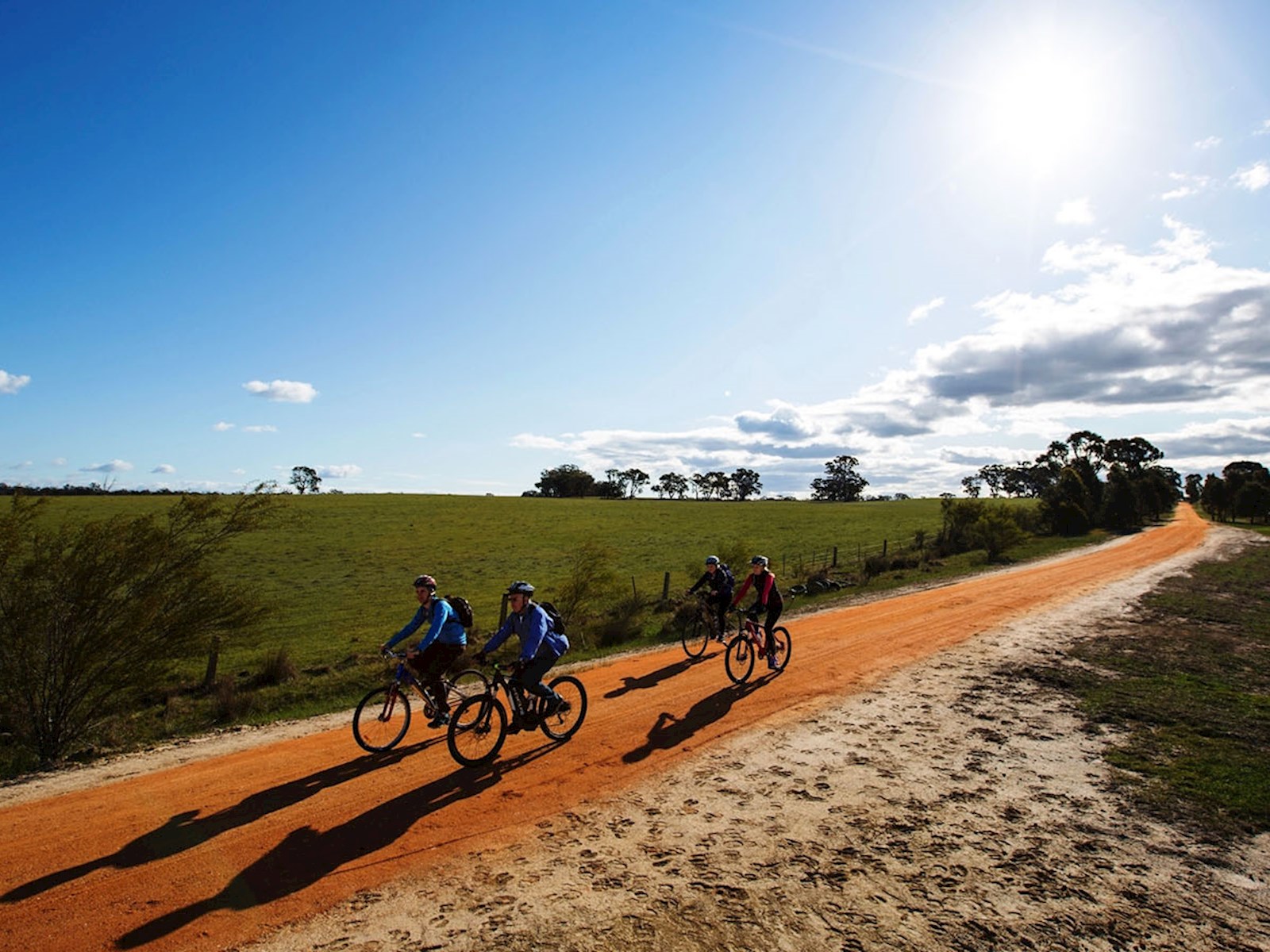
If you love riding a mountain bike, this trail will not disappoint even the novice. Located between Bendigo and Heathcote (49 kms), this trail wanders through varied landscapes and natural environments including a railway line, Campaspe River, Lake Eppalock and wildlife including kangaroos, wallabies, native birds. The trail’s gradients are flat overall and well maintained, with water stations, bike repair stations, and table/seats for trail users.
The total trail is 49 km but you can choose to pick your own. This rail-trail is supported by the Friends of the Bendigo Kilmore Rail Trail. Please consider supporting or donating to this group.
Axedale makes a convenient stopping point, with access to the Campaspe River Reserve and local food options. There are water stations and bike repair facilities at selected points, including Heathcote, Axedale and Junortoun.
Devil’s Cave and Viewing Rock Lookout
The trail starts at Powder Magazine and winds its way around to the Devil’s Cave and the Viewing Rock lookout, totalling about 2.6 km. There is an option to park at the Viewing Rock but crossing other cars if it gets busy can be tricky, hence many opt to walk from Powder Magazine.
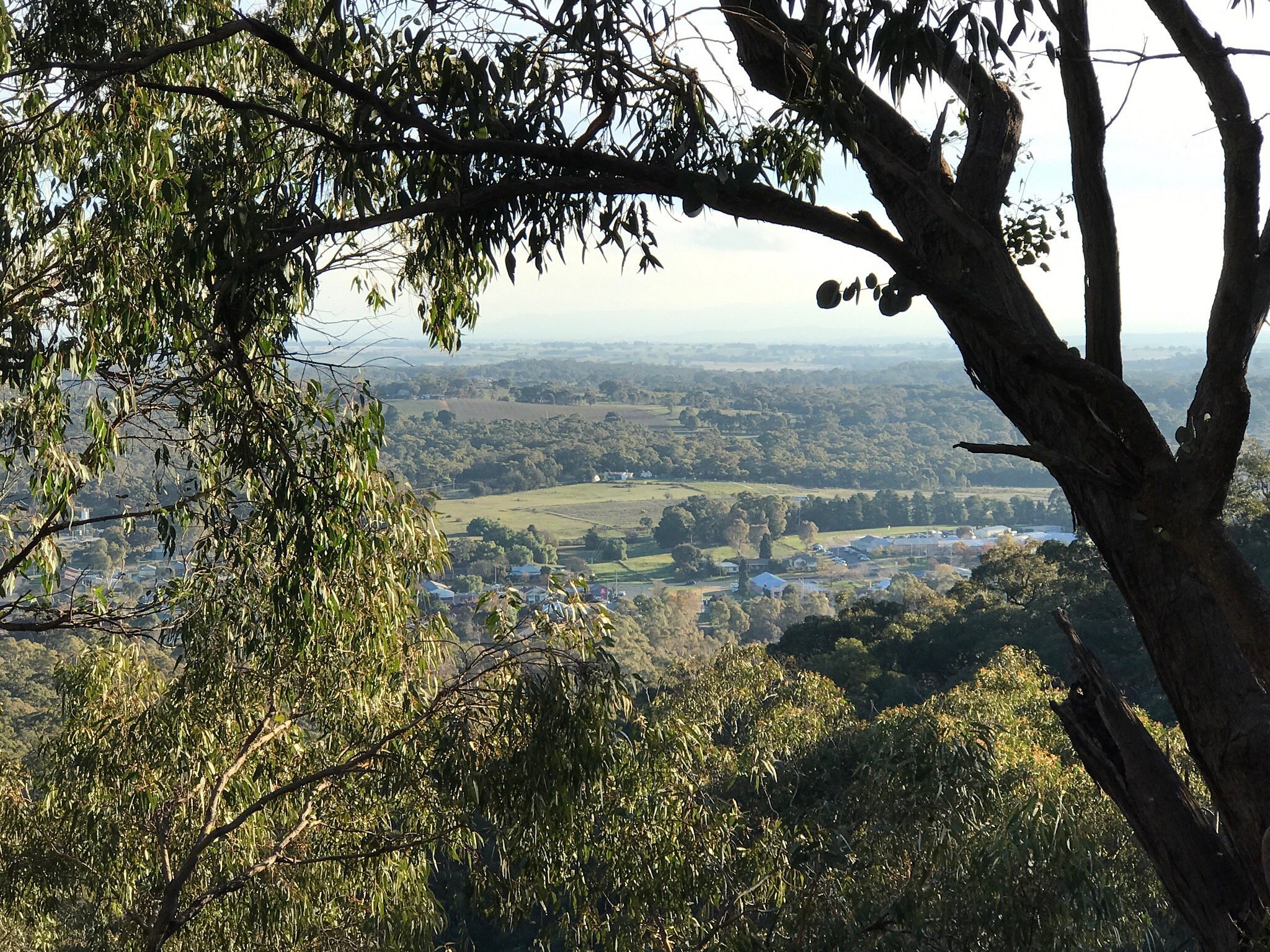
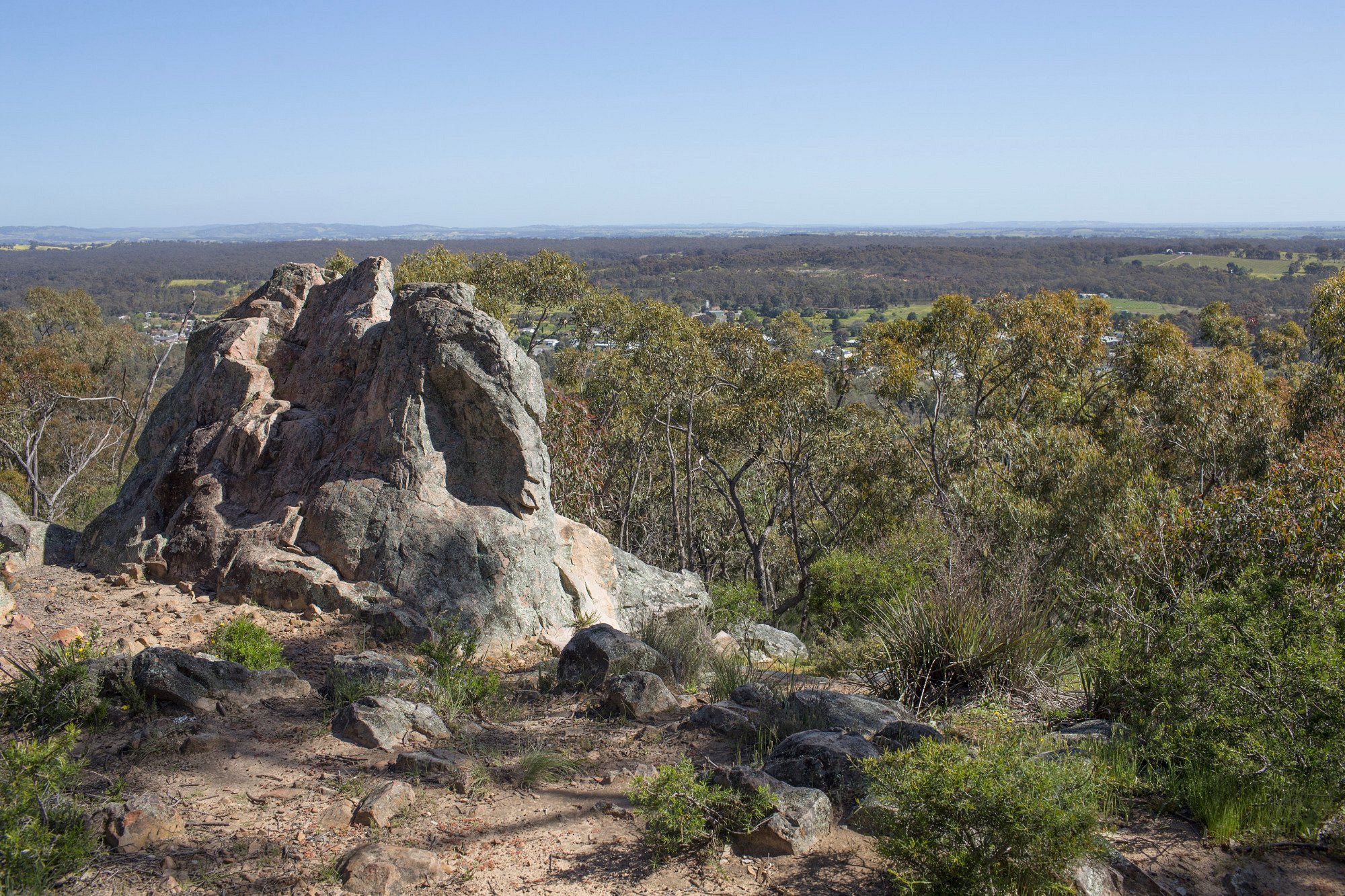
Ideally, a place to go if you want nothing much to do and need a little hike around town. The Devil’s Cave is more like a huge rock with a gap but makes for a good walk. What greets you is a crawling view of the entire Heathcote town along with plenty of kangaroos!
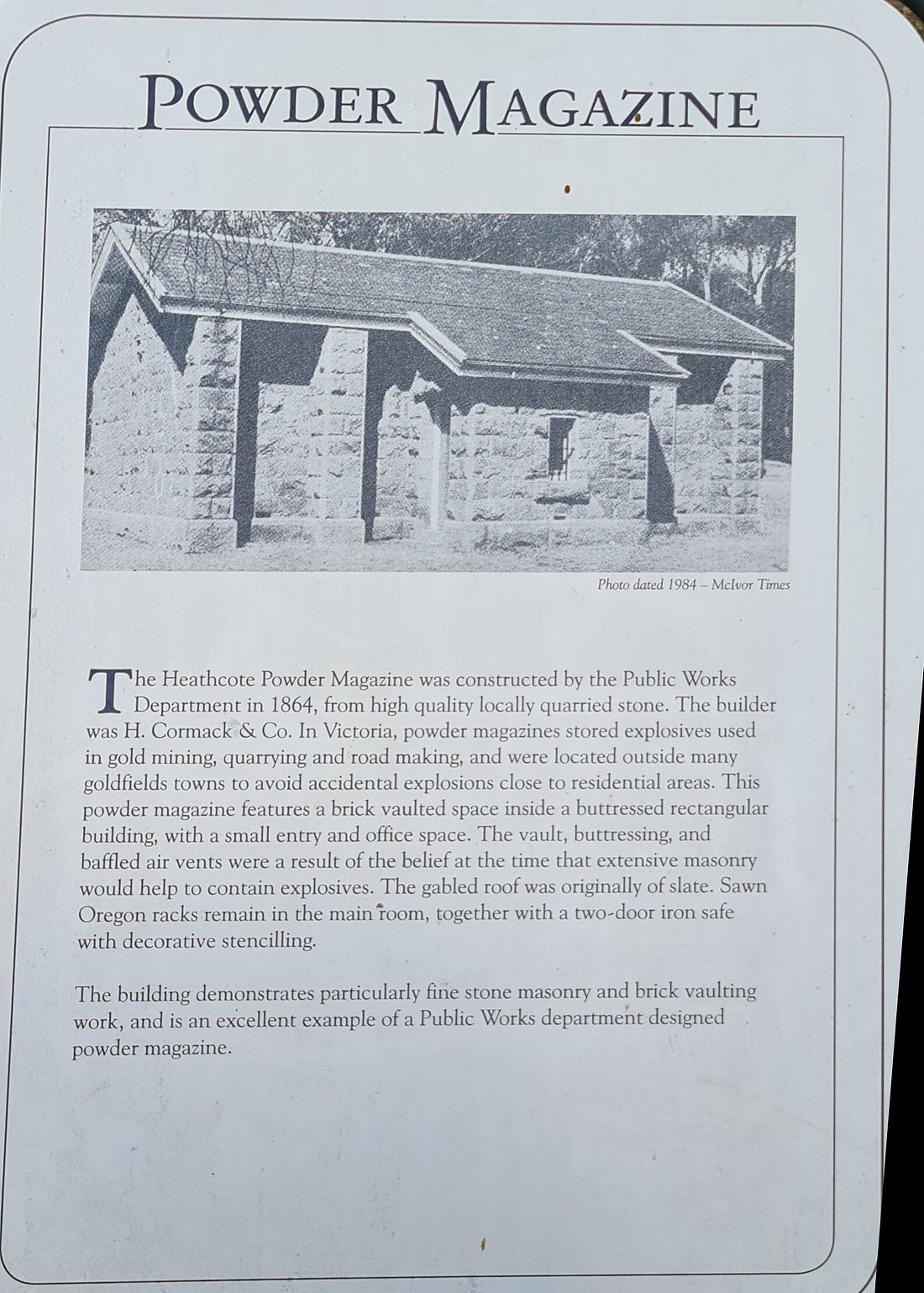
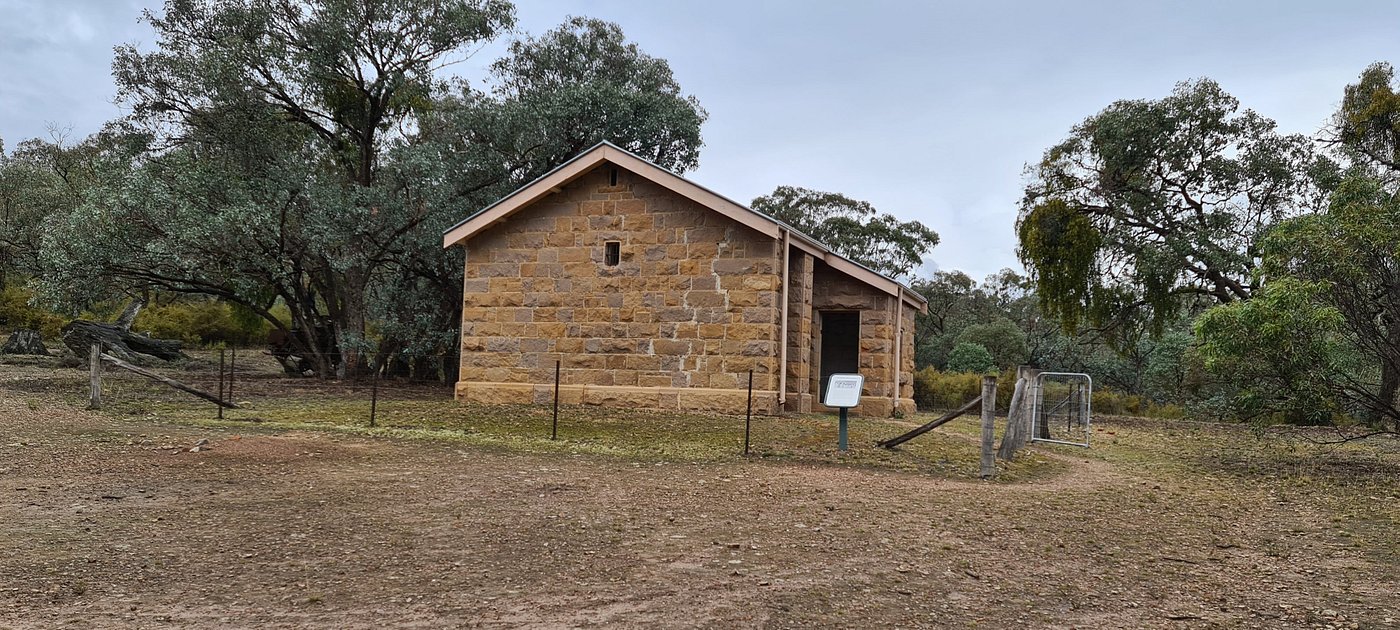
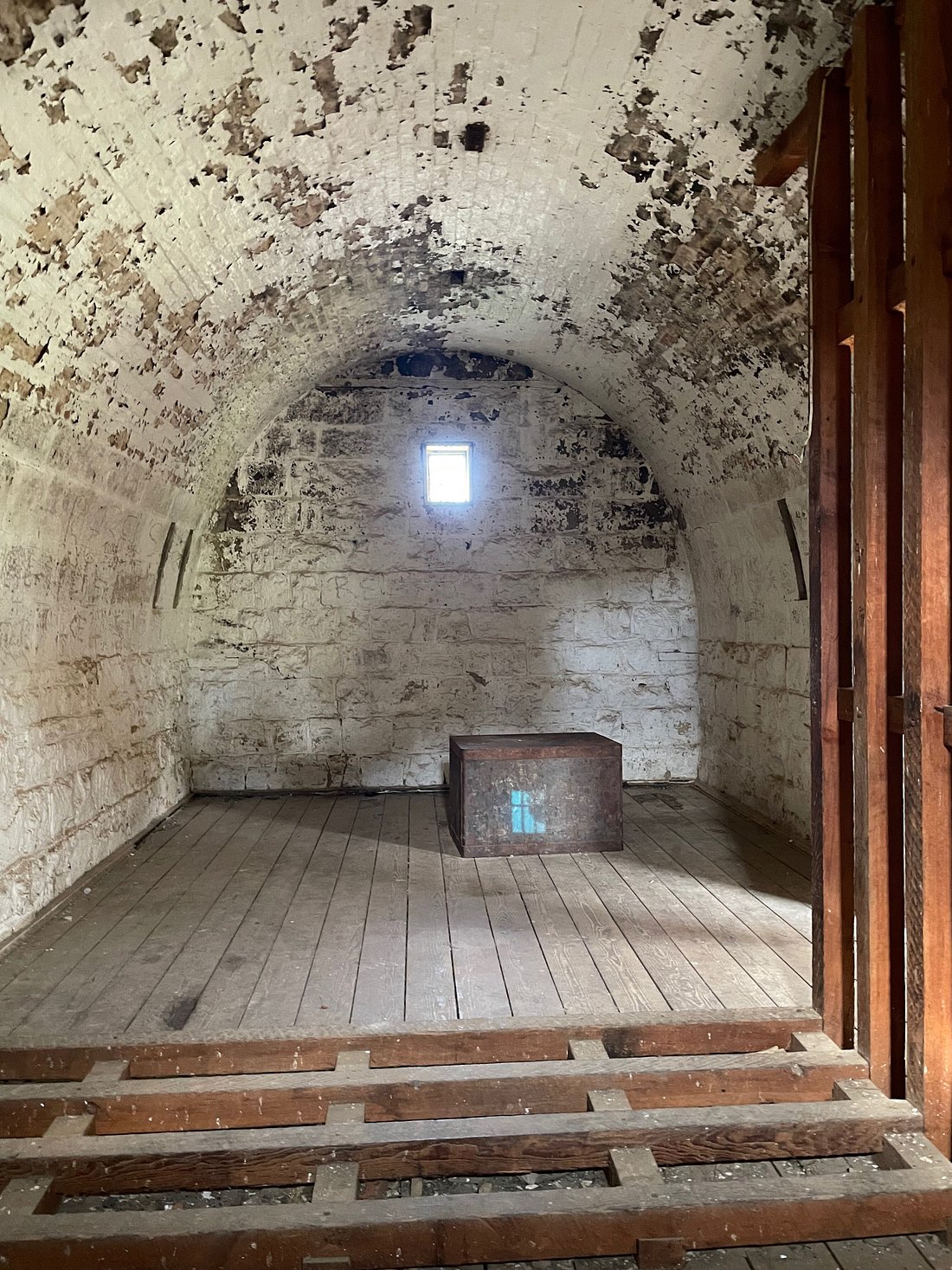
On your way up via the Power Magazine, look out at the Heathcote Gun Powder/blasting powder storage building. Built in 1864 by the Public Works Department, this stone structure was used to store gunpowder and other explosives required for gold mining and related activities.
Picnic at the Valley of Liquidambers
If your idea of a day out involves a little less walking and a little more relaxing, make your way to the Valley of Liquidambers.
Located close to the town centre, alongside McIvor Creek and the caravan park, this is a pleasant spot to enjoy some greenery and take a breather. The area is particularly beautiful in autumn when the liquidambar trees turn shades of golden yellow, orange and red.
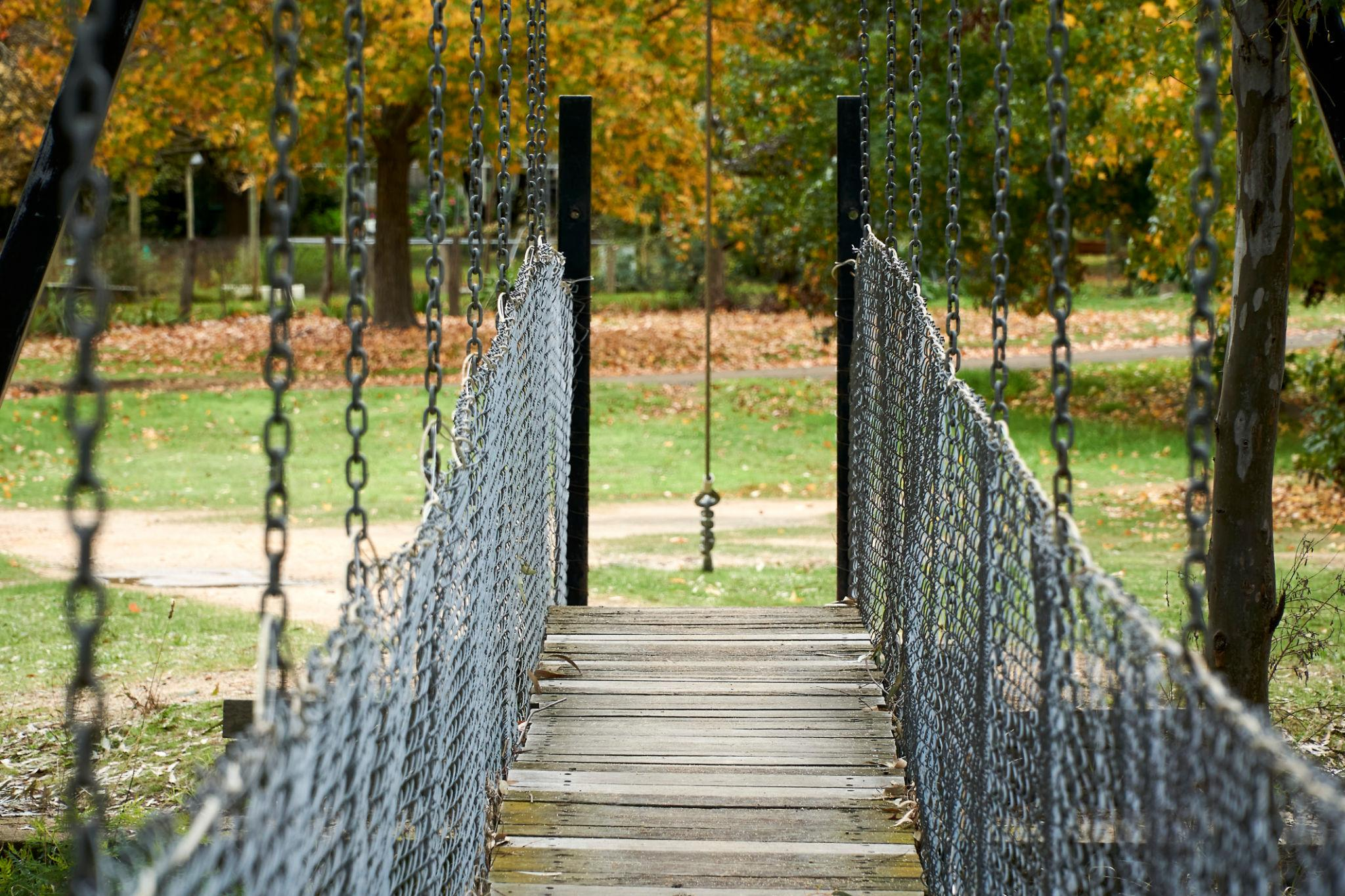
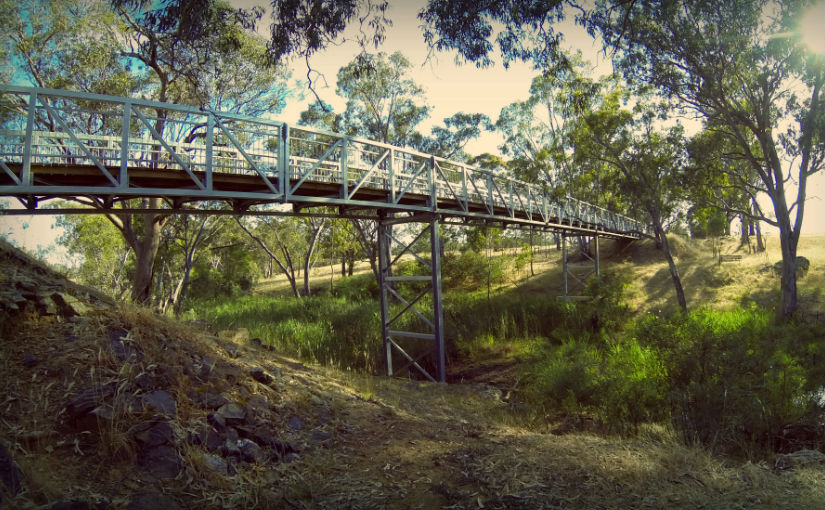
There is also a swinging bridge connecting the area with the main street, making it an enjoyable little detour while exploring the town.
Pack a picnic, enjoy a leisurely stroll or simply sit back and take in the surroundings.
Lake Eppalock: Finish the day by the water
About 15–20 minutes from Heathcote, Lake Eppalock is another worthwhile addition to your day trip.
Built on the Campaspe River in the 1960s, this large reservoir has become a popular destination for water-based recreation.
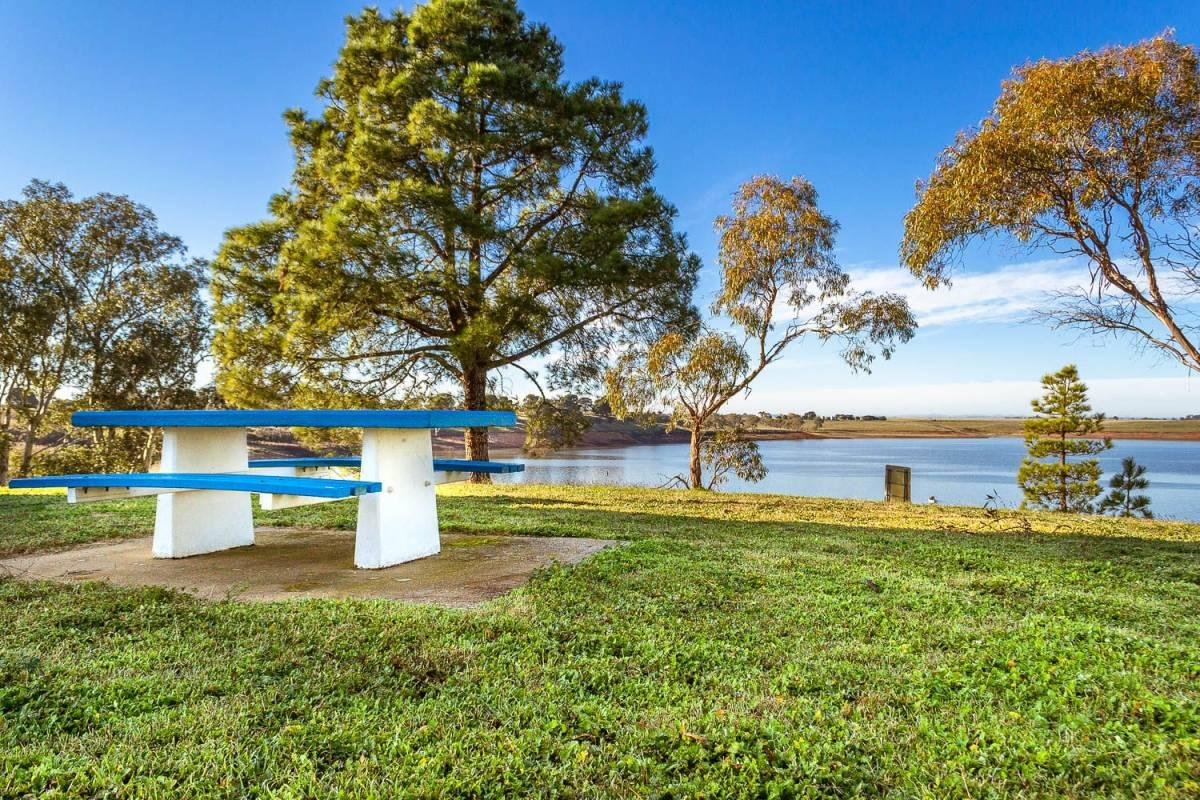
Depending on the season, water levels and local conditions, visitors can enjoy:
- Boating and water skiing.
- Fishing.
- Swimming in designated suitable areas.
- Lakeside picnics.
- Barbecues at available facilities.
- Relaxing views across the water.
There are several recreational access points around the lake, with facilities varying between locations. For a family outing, consider taking a picnic and spending some time by the water before heading home.
Mount Ida and the surrounding bushland
If you have extra time and enjoy exploring the outdoors, consider heading towards Mount Ida and the surrounding Heathcote-Graytown National Park.
The area offers opportunities for bushwalking, nature appreciation and panoramic views across the surrounding ranges and countryside.
Spring is particularly attractive for wildflowers, while cooler months can make longer walks more comfortable.
Check available tracks, access points and park conditions before setting off, as facilities and walking conditions vary.
A little taste of Heathcote: Food, local produce and country charm
You cannot visit Heathcote without noticing its strong food and wine culture. There are cellar doors and vineyards throughout the region, offering visitors an opportunity to sample local wines and meet the people behind them.
A couple of places worth exploring include:
Sanguine Estate: A well-known Heathcote winery offering an opportunity to experience the region’s wine culture and vineyard landscape. Check its current cellar-door arrangements before visiting.
Palling Bros Brewery: For something a little different, Palling Bros Brewery is another local name worth investigating. Check opening hours and family access arrangements before making it part of your itinerary.
And don’t overlook Heathcote’s High Street. Stop for coffee, visit a local bakery, browse the shops or enjoy lunch at one of the town’s cafés or country pubs.
Sometimes the best part of a country-town visit is simply wandering around without a particularly ambitious plan.
Location & Distance Guide to Heathcote
Getting there: Heathcote is approximately 110–120 km from Melbourne, with the drive generally taking around 1 hour 30 minutes to 1 hour 45 minutes, depending on traffic and your starting point.
Best time to visit: Spring and autumn are particularly pleasant for walking and photography. Autumn is especially lovely at the Valley of Liquidambers.
What to carry: Comfortable walking shoes, drinking water, sunscreen, hats, snacks and a camera.
With children: Pink Cliffs and the historic town centre are relatively easy additions to a family outing. The Viewing Rock walk requires more care and is better suited to children who can manage uneven bush tracks.


